
Last updated November 15, 2026
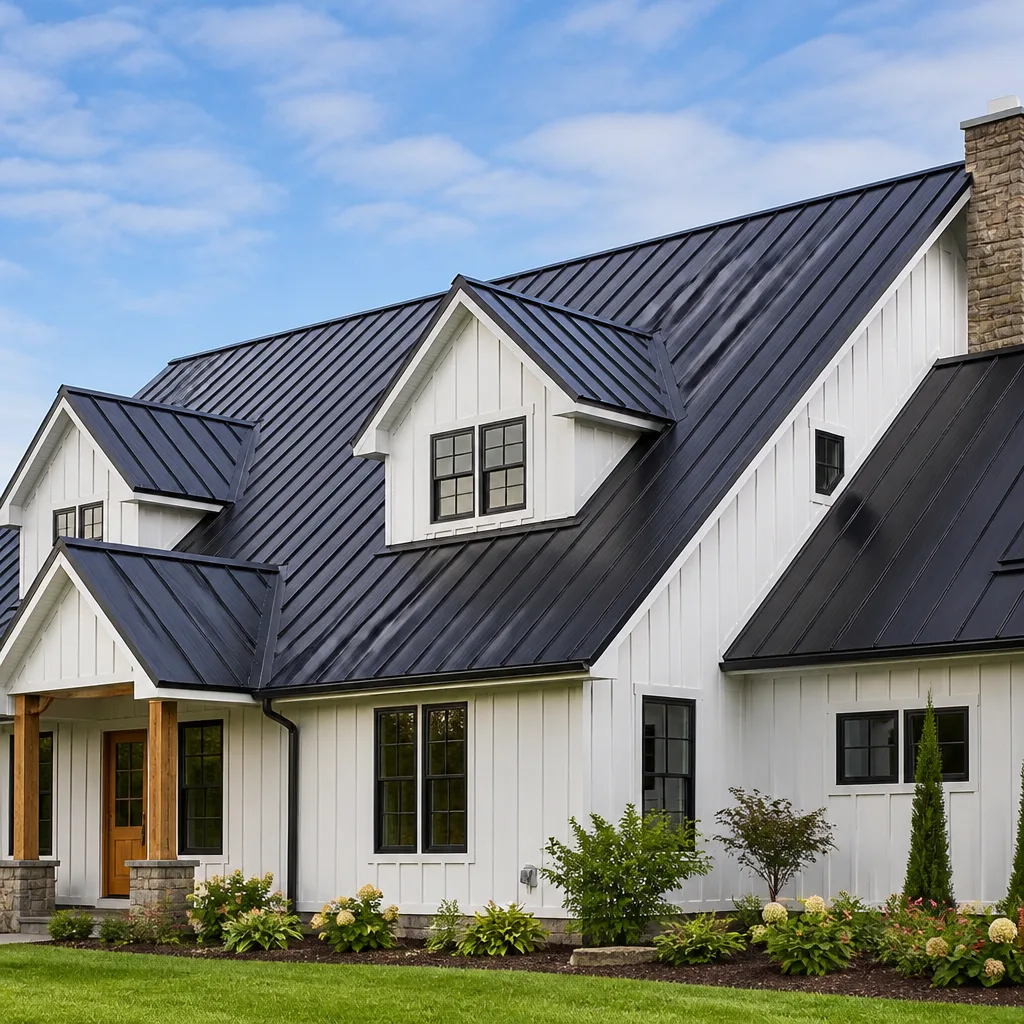 Metal roofing
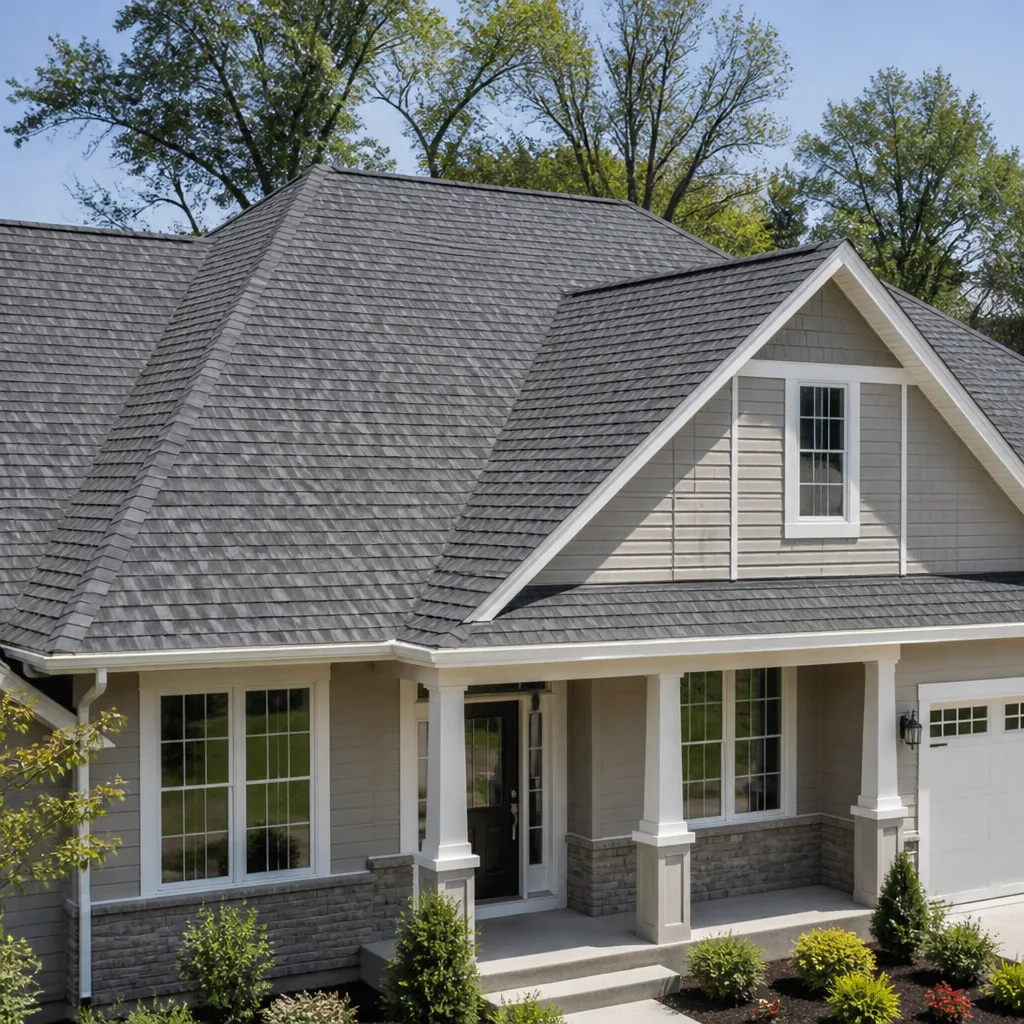 Architectural shingles
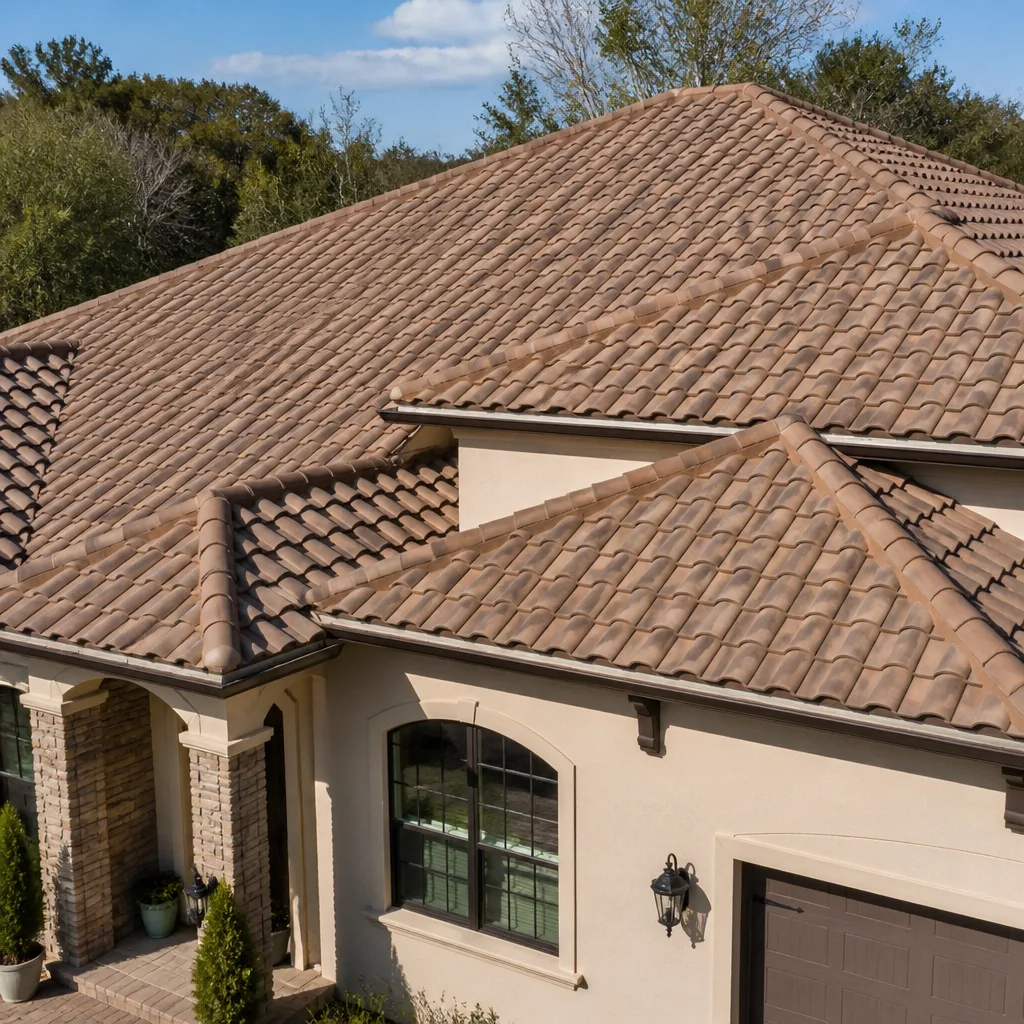 Tile roofing
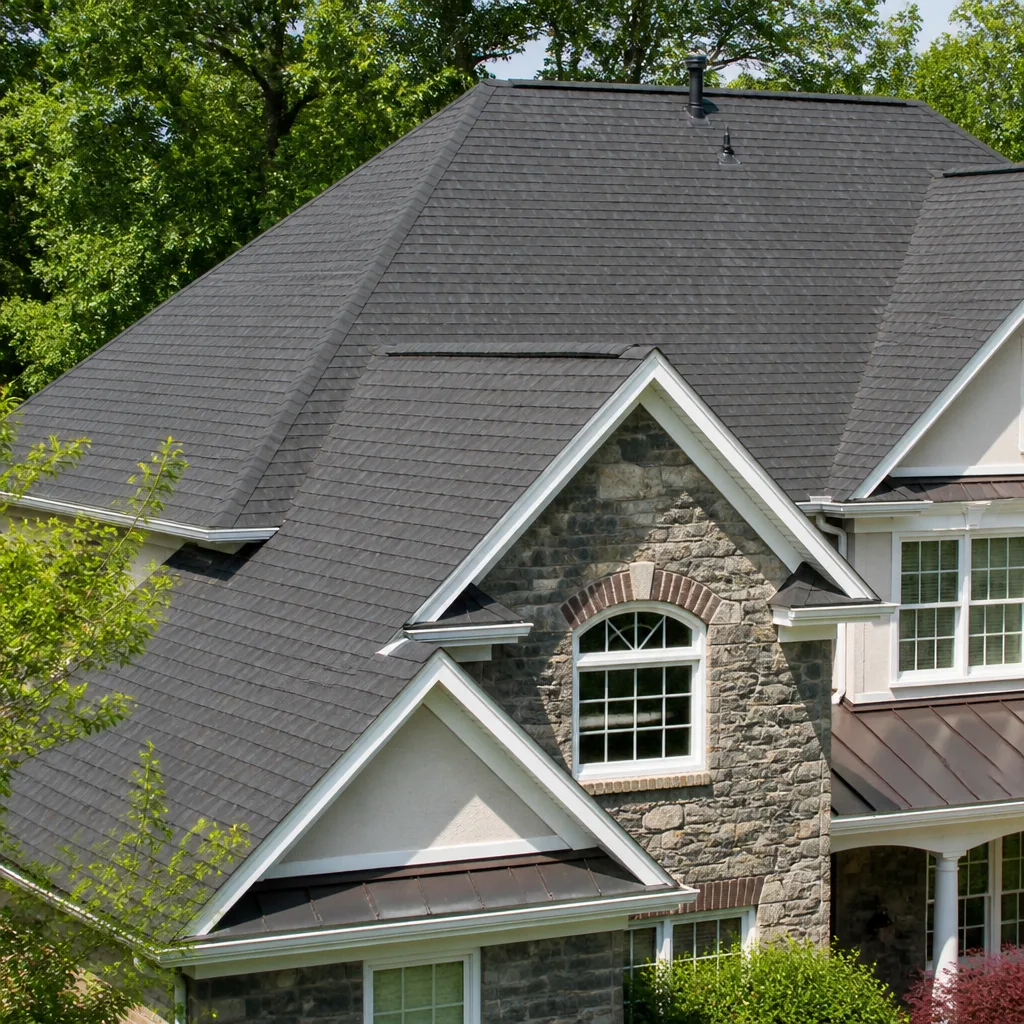 GAF
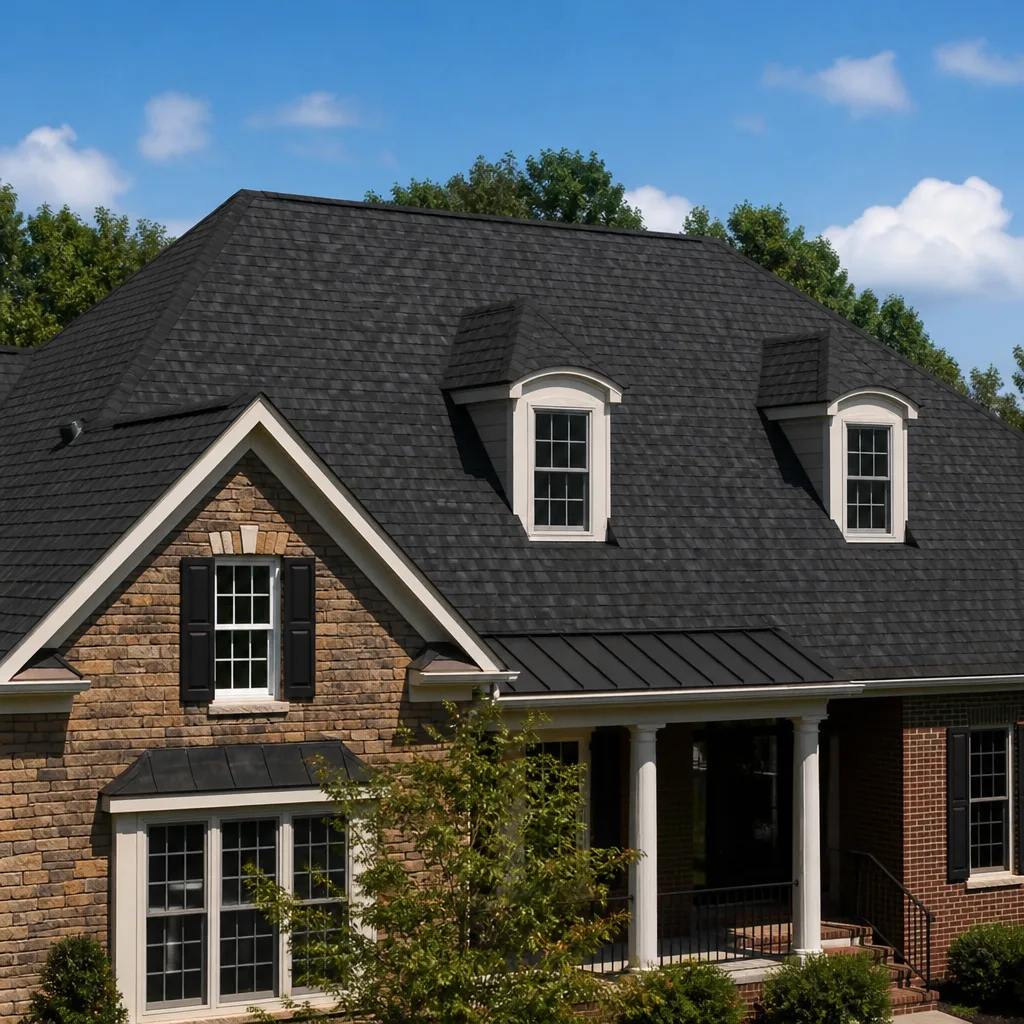 Owens Corning
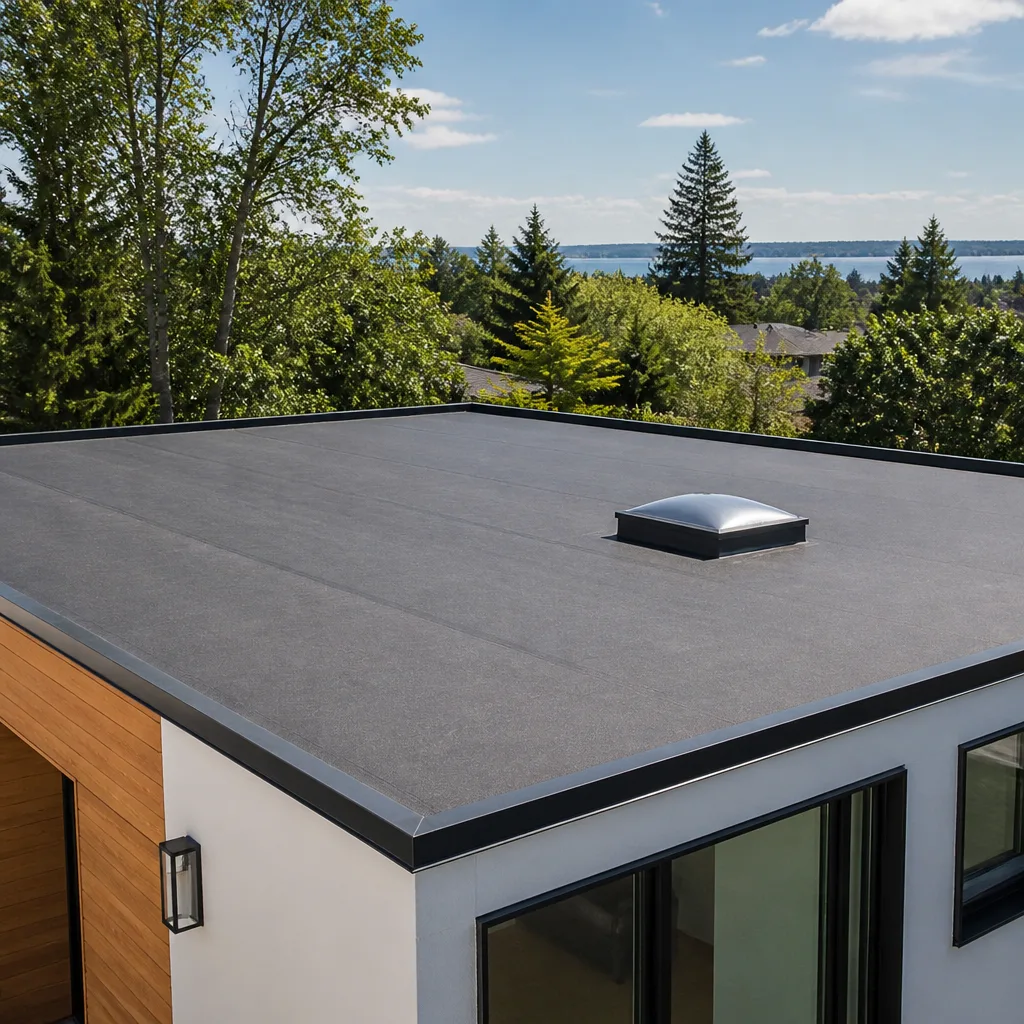 Flat & low-slope
Free roof inspection with deck photos before we talk money - GAF and Owens Corning certified installation
Roofing Emergency Preparedness Guide for Boca Raton Homes
Most homeowners think storm preparedness means a trip to the hardware store for tarps and sandbags. It doesn’t. The decisions that actually determine whether your roof claim goes smoothly are made months before a storm forms in the Atlantic: the photos you take, the contractor relationship you build, the policy language you read. After a major storm, wait times for a licensed roofer in Boca Raton can stretch to six weeks, and homeowners who haven’t prepared make rushed decisions under pressure from unlicensed storm chasers. This guide covers what to document, how emergency tarping actually works in South Florida, how to file a Florida roof claim correctly, and what to check on any contractor who knocks on your door.
Quick Answer
Roofing emergency preparedness in Boca Raton means three things done before hurricane season: a documented photo record of your roof that establishes a pre-loss baseline for insurance, a licensed roofer you already know and can call, and a clear understanding of your policy’s claim timeline and deductible. When damage does happen, you tarp correctly without adding penetrations, document everything before calling your insurer, and verify three DBPR credentials on any contractor before letting them on the roof.
Styles & brands we work with
- Architectural shingles
- Metal roofing
- Tile roofing
- GAF
- Owens Corning
- Flat & low-slope
Table of Contents
- The Pre-Season Roof Record: What to Document Before Hurricane Season
- Emergency Tarping in South Florida: The Correct Protocol
- How to File a Roof Damage Claim With a Florida Insurer
- Palm Beach County Emergency Permitting After a Declared Disaster
- Vetting a Contractor Who Shows Up After a Storm
- Why a Professional Inspection Belongs in Your Emergency Plan
- Why Material Options Matter When You Repair Under Pressure
- The First 48 Hours: A Step-by-Step Recovery Timeline
The Pre-Season Roof Record: What to Document Before Hurricane Season
The single most valuable hour you’ll spend on roofing emergency preparedness in Boca Raton costs nothing and happens before the first named storm. It’s a photo record of your roof in its current condition. Without a pre-loss baseline, an adjuster has no way to separate new damage from wear that was already there, and you spend the claim arguing about what was or wasn’t storm-related.
Walk the property and document methodically:
- Wide shots from each corner of the lot. Four photos, one from each side, showing the full roof plane. Include the skyline so the photo can be dated by what surrounds the house.
- Close-ups of every elevation. Shingle course lines, ridge caps, valleys, and the flashings around chimneys and vent stacks. These are the places storm damage shows up first.
- Interior ceilings and attic decking. Photograph each ceiling from below and the underside of the roof deck from the attic. Any existing water staining gets dated by these photos.
- Any current damage you already know about. A loose shingle, a cracked flashing, a small stain. Documenting it now means the insurer can’t dismiss a later, larger problem as pre-existing.
- Metadata and cloud backup. Most phone cameras embed the date and location automatically. Keep the full-resolution originals in cloud storage, not just texted copies.
Take the same set of photos each year, ideally in the spring before hurricane season begins. That gives you a dated timeline of your roof’s condition, which is far stronger in a claim than a single set of images taken the day after a storm. If photography from a ladder feels unsafe, our roof inspection service provides a documented baseline of the roof’s condition as a standalone job, so you have a written and photographed record before any repair or replacement decision is made. Know before you spend.
Emergency Tarping in South Florida: The Correct Protocol
Emergency tarping sounds simple and is done wrong constantly. The goal is to stop water from getting into the house, not to seal the roof permanently. A tarp that directs water into a low spot, or one held down with nails driven through the shingles, can turn a repairable problem into a full deck replacement.
Here’s the protocol that holds up in South Florida wind and rain:
- Overlap generously. Each run of tarp should overlap the next by at least a foot, with the upper sheet on top so water runs off, not into a seam.
- Fasten to the structure, not the shingles. Any fastener you drive through the roof surface is a new hole that needs sealing later. Secure the tarp edges to fascia, ridge battens, or sandbags. If you must fasten through the roof, use capped fasteners driven into rafter lines and understand those penetrations will need repair.
- Let it drape, don’t seal it tight. A tarp laid flat seals moisture underneath. Roofers leave a slight slope and open edges so the roof can breathe and trapped water can escape.
- Understand blue poly’s limits. Standard blue poly tarps are not designed for sustained high wind. They flap, abrade, and tear at grommets. A heavier woven or reinforced tarp holds far better, and even then, a tarp is a stopgap measured in days and weeks, not months.
Tarping a two-story roof in wind and rain is genuinely hazardous, and every year people are injured doing it. If you can’t do it safely from the ground or from a low, stable position, call us. We answer 24/7. Fast dispatch from 7am to 7pm, Sunday through Friday, and we’ll get a proper temporary cover on so the interior stays dry. Our technicians have up to 15 years of experience with the kind of temporary work Boca Raton storms demand.
How to File a Roof Damage Claim With a Florida Insurer
Filing a roof claim in Florida is a documentation exercise first and a conversation second. The order matters: photograph and document the damage thoroughly before you call your insurer, because everything you say to an adjuster is evaluated against the evidence you can produce.
Here’s how a claim usually goes, in the order it should happen:
- Document before you call. Photos of every damaged area, interior staining, and the pre-season baseline you took in the spring. Note the date and time of the storm.
- Report the loss promptly. Florida policies require you to report storm damage within a defined window, typically measured in days to weeks from the date of loss. Read your policy declarations page for the exact wording, because the clock starts at the storm, not at the day you noticed the leak.
- Review your deductible before you file. Many Florida policies carry a separate hurricane deductible, often expressed as a percentage of the dwelling coverage rather than a flat dollar amount. Know your number before you decide whether to file.
- Meet the adjuster with your documentation in hand. Walk the roof with them if it’s safe. Point to the specific damage you photographed. Don’t speculate about cause.
- Understand the public adjuster’s role. A public adjuster works for you, not the insurer, and is paid a percentage of the settlement. They can be valuable on a large or disputed claim and unnecessary on a clean one. If you hire one, get the contract and fee in writing first.
What should you never say to an adjuster without documentation? Never claim a cause you can’t support. “It’s been leaking for a while” without dated photos invites a pre-existing-condition denial. Let the evidence tell the story. If the roof needs repair from storm damage, our roof repair team can inspect and give you a written assessment you can hand to your insurer.
Palm Beach County Emergency Permitting After a Declared Disaster
After a declared disaster, Palm Beach County typically stands up an emergency permitting process that differs from the normal path in both speed and sequence. In a standard repair or replacement, a permit application comes first, then inspection, then work. In an emergency, the county often allows protective work like tarping and temporary repairs to proceed immediately, with the formal permit application filed afterward within a defined window.
What homeowners should know:
- Protective work comes first. Emergency measures to prevent further damage are usually permitted without the standard advance approval, but they must be documented and followed by the formal application.
- The formal permit still applies. Emergency measures don’t exempt anyone from pulling a permit for the actual repair or replacement. A roofer who says permits aren’t needed because of the storm is wrong.
- Inspections may be expedited, not skipped. The county may run inspections on a compressed schedule, but a permit that isn’t inspected stays open, and an open permit can complicate a future sale.
- Ask the building department directly. Rules change with each disaster declaration. The most reliable source is the Palm Beach County building department itself, and a licensed contractor will know the current process.
For a full replacement, our roof replacement process includes pulling the permit and passing inspection as part of the job. If the scope of a repair expands into replacement, you don’t have to start over with a second contractor: inspection, repair, and replacement all sit under one roof with us.
Vetting a Contractor Who Shows Up After a Storm
After a major storm, roofing contractors from outside the area descend on neighborhoods with clipboards and cash-only offers. Many are legitimate; some aren’t. You can filter out the unlicensed operators with three checks that take under five minutes, all through the Florida Department of Business and Professional Regulation (DBPR).
- Verify the license. Look up the contractor’s license number on the DBPR website. A legitimate roofer has a state or county license number they’ll provide without hesitation. If they can’t or won’t, stop there.
- Check the license is active and not expired. An expired license is as bad as none. Confirm the license is current and in the right category for the work.
- Look for complaints or disciplinary history. The DBPR record shows disciplinary actions. A pattern of complaints is a warning sign.
Beyond the DBPR checks: never pay a large deposit up front, never sign a contract with a blank scope, and never let anyone who was not on the roof hand you a bid the same day. Unsolicited door-knocking isn’t automatically a scam, but it does mean you do the verifying. When we look at a Boca Raton roof, our Benchmark Roof Repair team starts with a documented inspection so you know what’s actually wrong before anyone talks about money.
Why a Professional Inspection Belongs in Your Emergency Plan
An inspection is the cheapest part of a roofing emergency plan and the most overlooked. A documented condition assessment taken before hurricane season tells you what shape your roof is in, what to fix while it’s cheap, and what to expect an adjuster to find. It also creates a written baseline that pairs with your photo record.
In our experience, the roofs that come through a Boca Raton storm with the least drama are the ones where a small flashing issue or a lifted ridge cap got fixed in the dry season. A start-of-season inspection surfaces:
- Worn or missing shingles and lifted sealant lines
- Deteriorated flashings around chimneys, vents, and wall junctions
- Loose or damaged ridge caps, which are the first thing wind takes
- Interior staining or attic moisture that points to a leak already underway
- Any prior repair that wasn’t sealed correctly
We run roof inspection as a standalone service, which means the assessment is honest and not tied to a replacement quote. Our Boca Raton inspectors are trained to read a roof’s condition the way an adjuster will, so the report you keep on file matches what your insurer will want to see. Schedule an inspection before hurricane season and put the report in the same folder as your photos.
Why Material Options Matter When You Repair Under Pressure
When a storm forces a repair, the decision you make under pressure is often dictated by what your contractor can actually install. That’s why the contractor relationship matters before the storm, and why it matters that the relationship isn’t locked to a single brand.
Shingles are not interchangeable. Each manufacturer builds its products with distinct installation requirements, and an installer who works across multiple brands can match the material to the roof instead of the other way around. We work with seven of the leading shingle brands, including IKO, Atlas, Tamko, and Boral, in addition to GAF, CertainTeed, and Owens Corning. The practical effect after a storm: when a specific color or profile is back-ordered, we have alternatives that fit the roof and the budget rather than a single line that’s stuck at the supplier.
That range matters for a second reason. A roof that’s mid-life with a small repair doesn’t always need the same product as a full replacement, and a contractor tied to one brand can’t make that distinction honestly. Material recommendations should be driven by the roof’s needs, not a supplier agreement. Manufacturer warranties on the shingles apply as the manufacturer offers them; the product line you choose carries the warranty that goes with it.
The First 48 Hours: A Step-by-Step Recovery Timeline
The decisions made in the first 48 hours after storm damage shape the entire claim. Here’s how a clean recovery sequence looks, from the moment the wind stops:
- Stabilize, then document. If water is coming in, get the leak stopped with a correct temporary cover. Then photograph everything. Document the interior before you move a single item.
- Get a professional assessment before you file. A licensed roofer’s written inspection gives you a scope and a cause to discuss with your insurer. Filing blind invites surprises.
- Report the loss to your insurer promptly. Check your policy’s reporting window and note the date of loss. Keep a written log of every call, date, and person you speak with.
- Meet the adjuster with your documentation. Pre-season photos, storm-damage photos, and the roofer’s assessment. Evidence leads, conversation follows.
- Confirm the permit path with the county. Temporary protective work first, formal permit application for the permanent repair, inspections to close it out.
- Get a written, line-item scope before any work starts. The written estimate sets the final price. No verbal numbers, no blank contracts, no deposits without a signed scope.
If the interior is wet, don’t wait on the roofer to fail before you call. We answer 24/7. A call outside dispatch hours is booked into the next opening, Sunday through Friday, 7am to 7pm.
Common Mistakes to Avoid
- Filing a claim with no photos. An adjuster who sees storm damage but no pre-storm baseline has to decide what’s new. That usually goes badly for the homeowner. Take an annual record before hurricane season and keep it in the cloud.
- Tarping the roof yourself with nails through the shingles. Every fastener you drive into the roof surface is a new penetration that has to be sealed later, and a wrong tarp placement can funnel water into the house. If it isn’t safe from the ground or a low, stable position, don’t do it.
- Skipping the deductible check. Florida hurricane deductibles are often a percentage of dwelling coverage, and homeowners sometimes file a claim that lands under the deductible and costs them a claim on their record for nothing. Know your number first.
- Letting an unsolicited contractor on the roof before checking the DBPR. A five-minute check filters out unlicensed operators. Do it every time, even if the offer sounds good.
- Paying a large deposit up front for a storm repair. Legitimate contractors don’t need most of the money before the work starts. A signed scope and a modest deposit are the norm.
- Assuming emergency permission replaces the permit. Emergency tarping and protective work may proceed without prior approval, but the permanent repair still needs a permit and a passed inspection. An open permit can complicate a later sale.
- Accepting “it’s too early to tell” on the roof’s condition. A documented inspection from a professional tells you what the roof actually needs, repair or replacement, before you make a decision under pressure.
See the difference
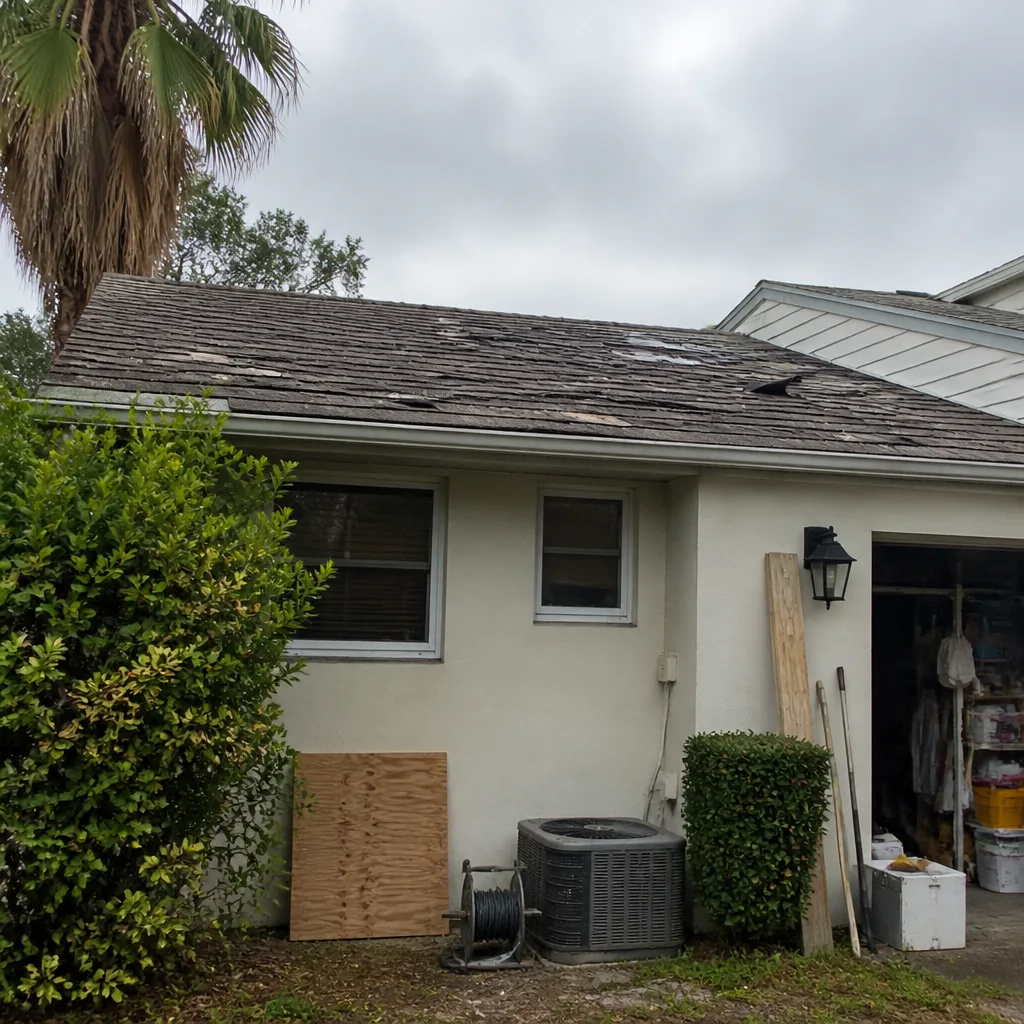 Before
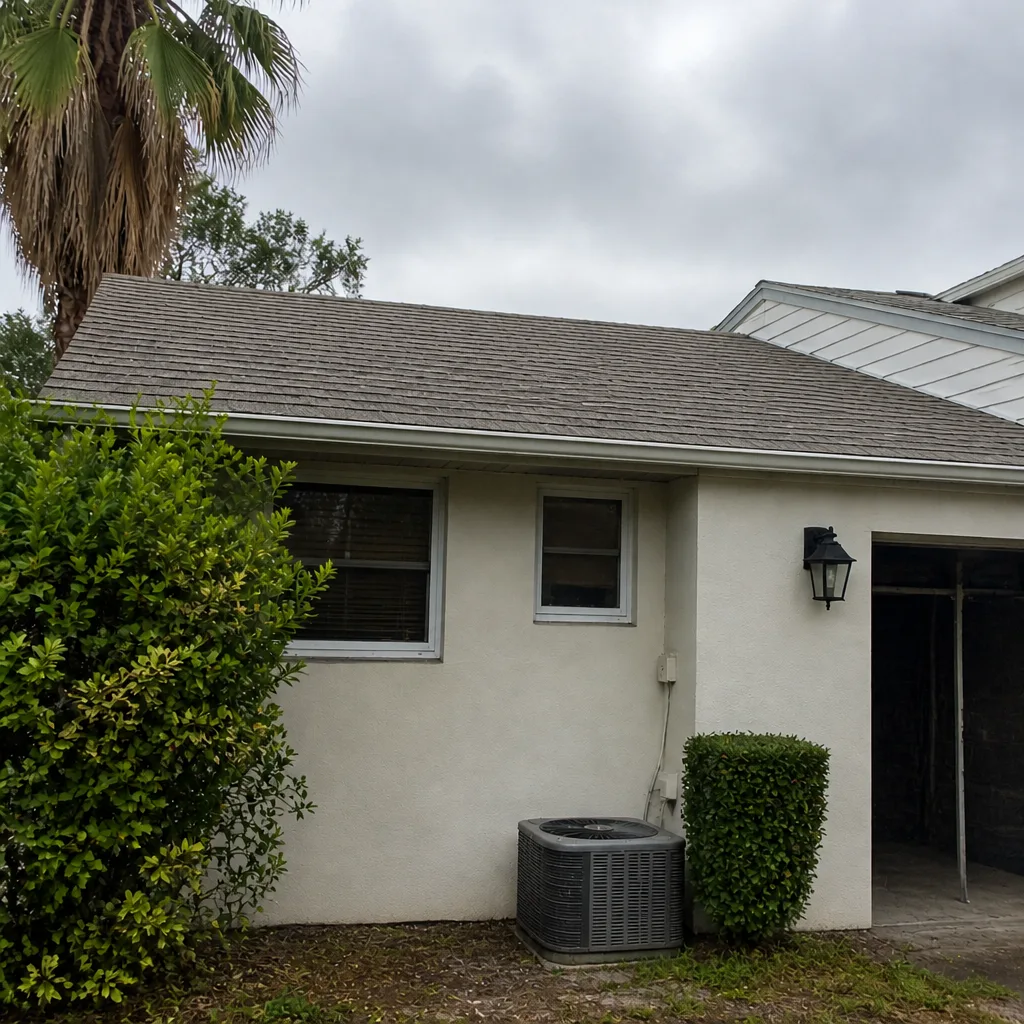 After
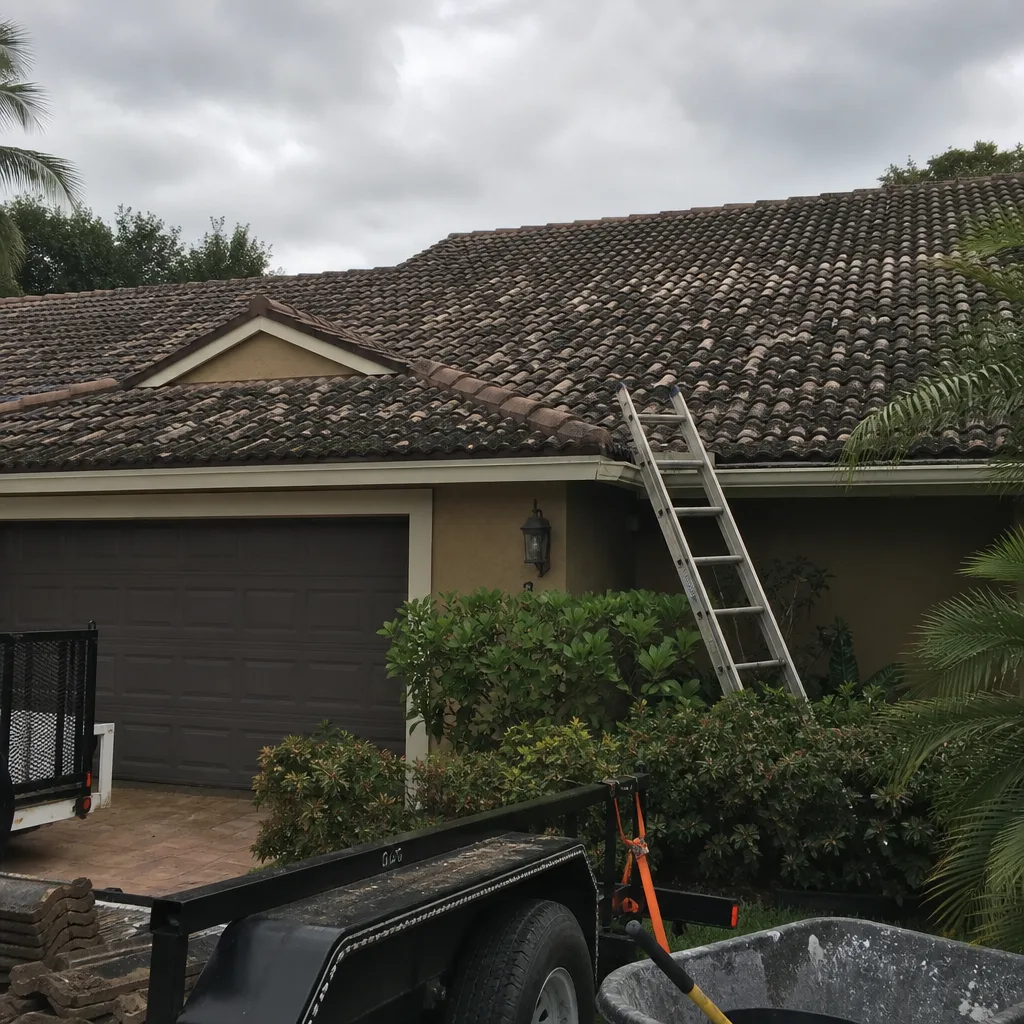 Before
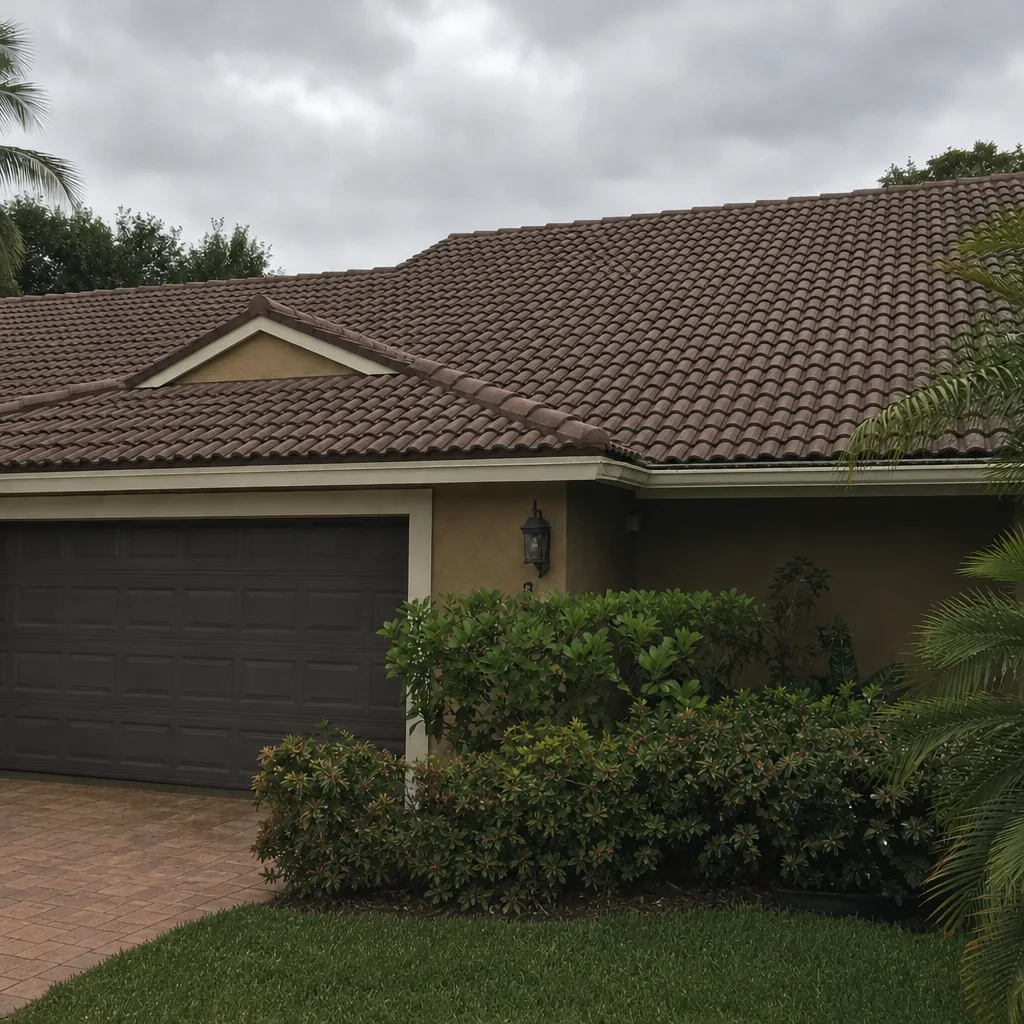 After
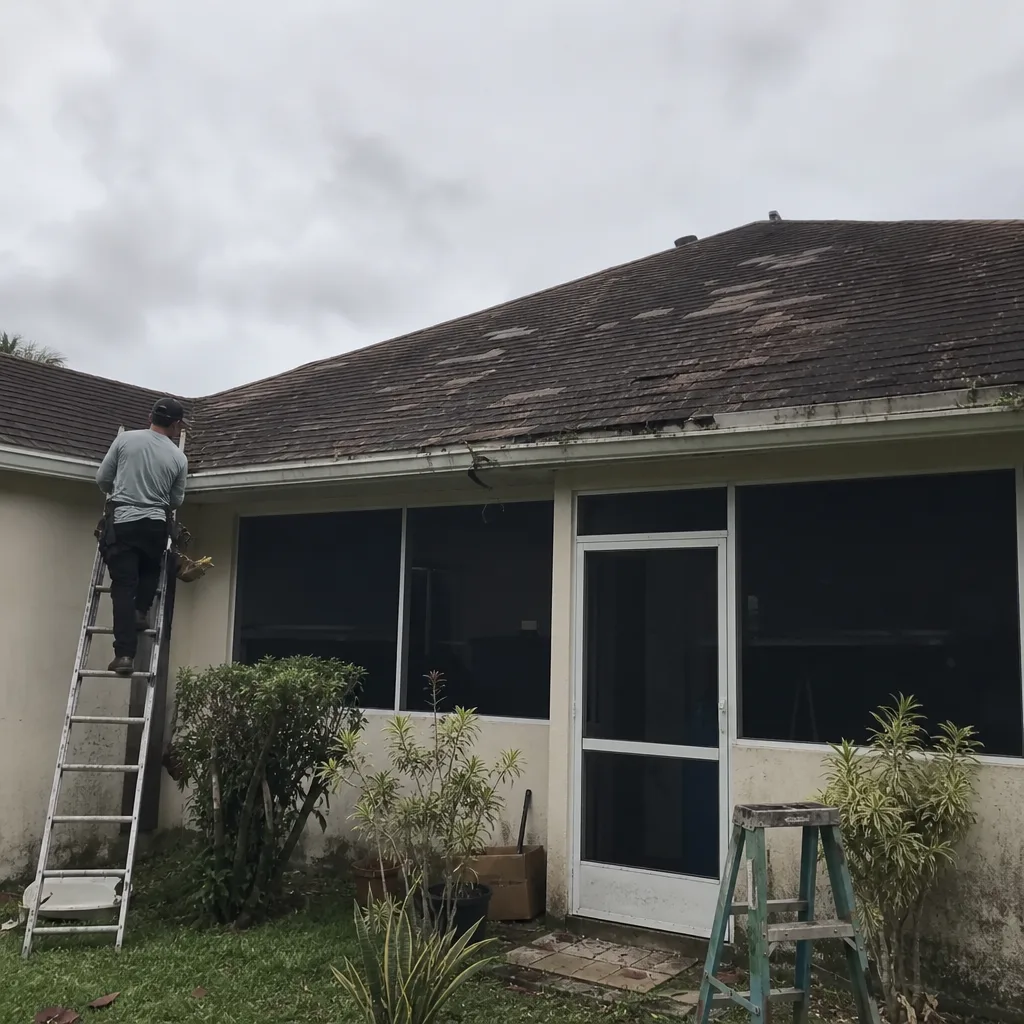 Before
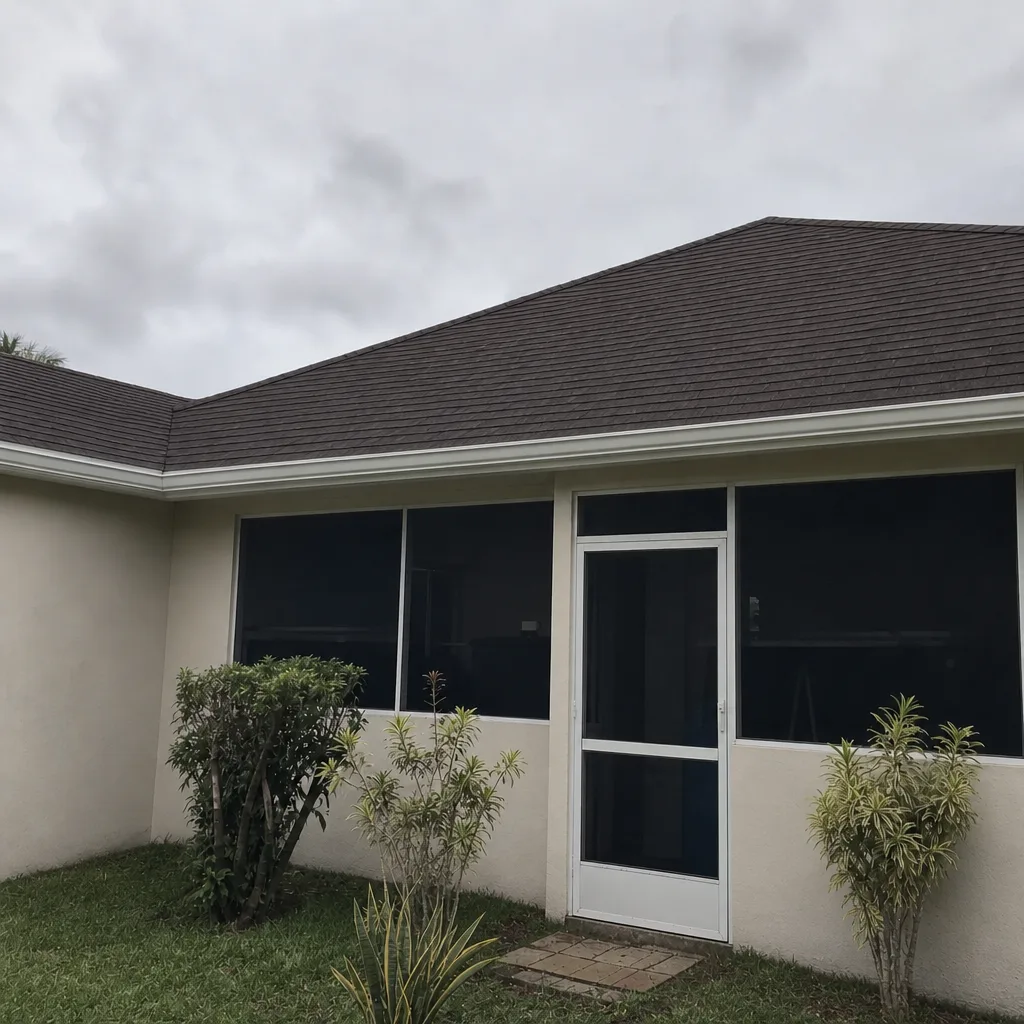 After
When to Call a Professional
Some roofing concerns you can check from the ground. Others need a professional on the roof, and a few need one right away. Call us if you see water staining on ceilings or attic decking after a storm, if shingles are visibly lifted or missing, if the ridge cap has come loose, or if a tarp is flapping and needs a proper cover. Do not climb a two-story roof after a storm to investigate; that’s a job for a trained professional, and our technicians have up to 15 years of experience with Boca Raton roof conditions. We handle inspection, repair, and replacement, so whatever the roof actually needs, you’re not handed off to a second contractor. Benchmark Roof Repair offers free estimates in Boca Raton. Call (866) 942-9891. We answer 24/7.
Frequently Asked Questions
Get a documented roof inspection before the season starts, take an annual photo record of the roof’s condition for your insurance file, and establish a relationship with a licensed roofer you can call after a storm. Know your deductible, especially any separate hurricane deductible, and read the claim reporting window on your policy declarations page.
No. A tarp is a temporary measure to stop water intrusion until a permanent repair or replacement can be done, and a correct tarp is designed to shed water without adding new penetrations to the roof. Blue poly tarps have real limits in wind, so a tarp should be treated as a stopgap measured in days or weeks, not months.
Florida policies typically require you to report storm damage within a defined window from the date of loss, often a matter of days to weeks, and the clock starts at the storm. Read your specific policy declarations page for the exact wording, and report promptly with your documentation in hand.
Yes, for the permanent repair. After a declared disaster, Palm Beach County typically allows emergency protective work like tarping to proceed first, followed by a formal permit application for the actual repair or replacement. A roofer who says the storm exempts you from a permit is giving you bad information.
Use the Florida Department of Business and Professional Regulation (DBPR) website to verify the license number, confirm the license is active and in the right category, and review any disciplinary history. The three checks take under five minutes and should be done on any contractor you don’t already know, especially one who shows up unsolicited after a storm.
It depends on the policy, the deductible, and the documented damage. An adjuster uses your pre-season photo baseline, the storm-damage documentation, and a professional assessment to determine whether the roof can be repaired or must be replaced. A written inspection before you file gives you a scope to discuss and protects against a pre-existing-condition denial.
The Bottom Line
Roofing emergency preparedness in Boca Raton is mostly done in the quiet season: a documented baseline of the roof, a contractor you already know, a deductible you already understand, and three DBPR checks you know how to run in five minutes. When a storm does hit, those preparations carry the claim. Document before you call, tarp correctly or call for help, report the loss promptly, meet the adjuster with evidence, confirm the permit path, and get a written line-item scope before any work starts. The company name is the standard we hold ourselves to, and we set it on every job, from inspection to installation. Call (866) 942-9891 for a free estimate. We answer 24/7. Fast dispatch from 7am to 7pm, Sunday through Friday.
Written by the team at Benchmark Roof Repair.