
Last updated November 15, 2026
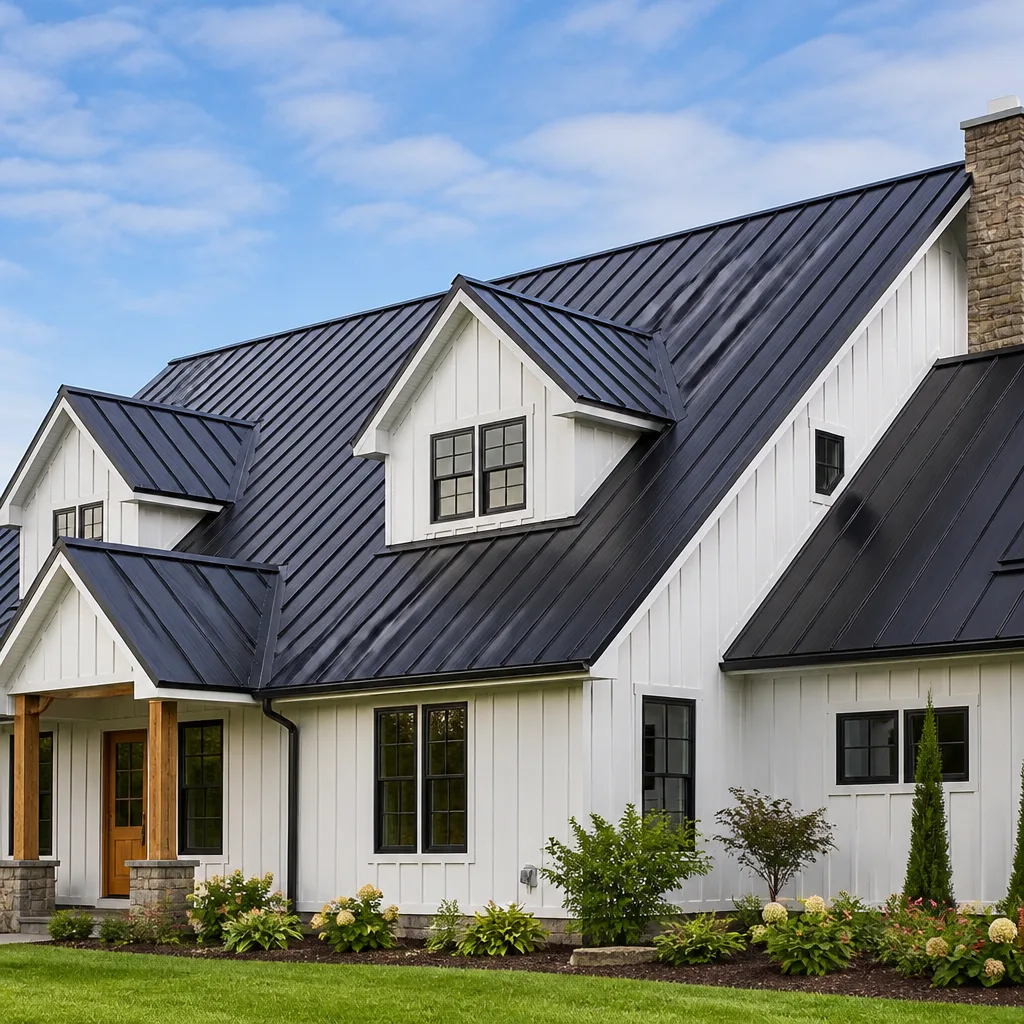 Metal roofing
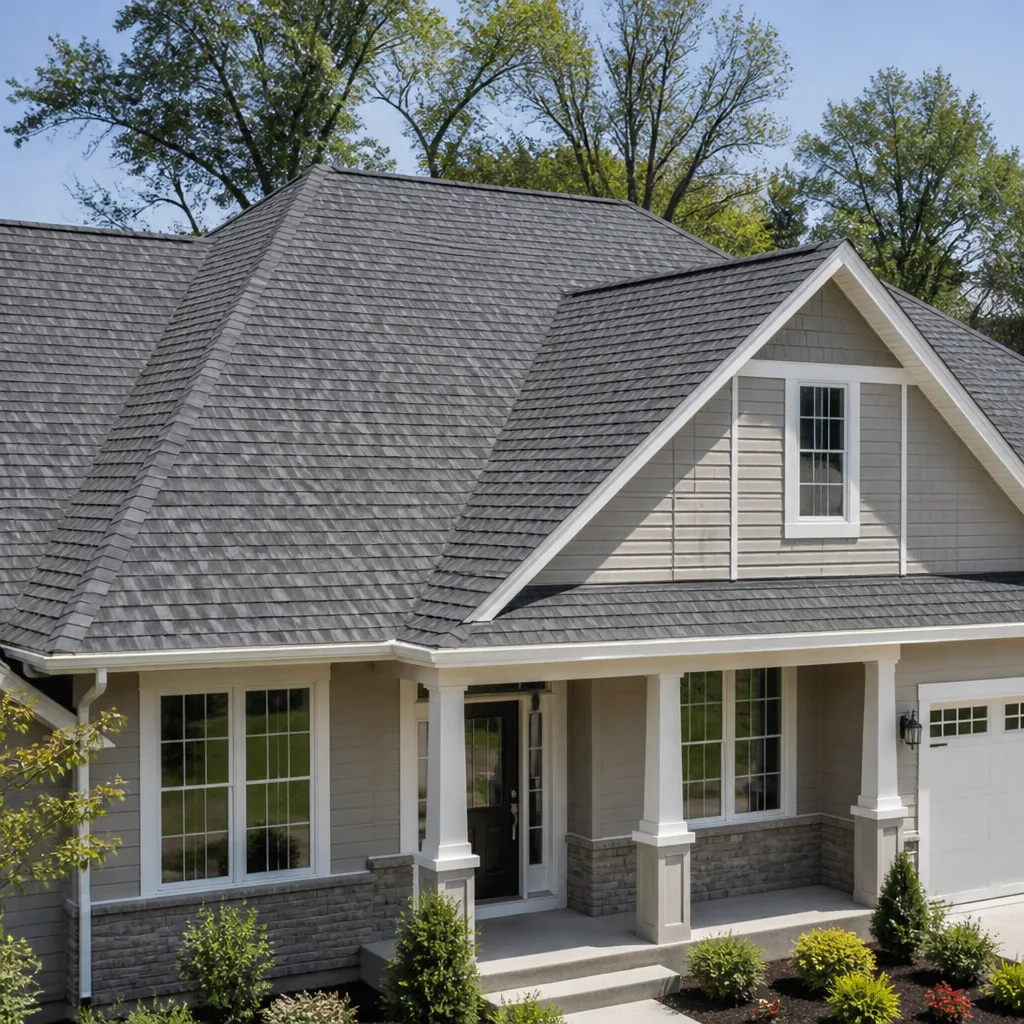 Architectural shingles
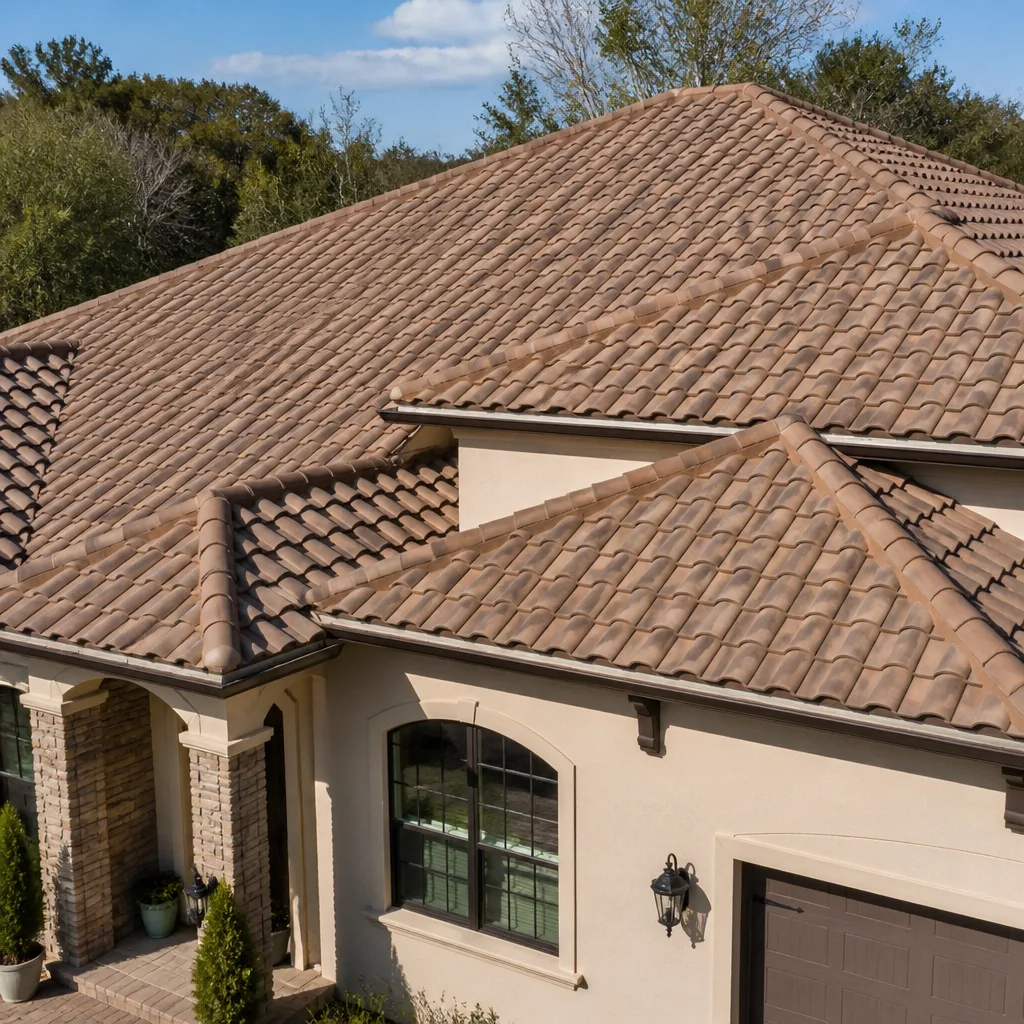 Tile roofing
 GAF
 Owens Corning
 Flat & low-slope
Free roof inspection with deck photos before we talk money - GAF and Owens Corning certified installation
Seasonal Roofing Care for Boca Raton: Year-Round Homeowner’s Guide
Most seasonal roof care advice you’ll find for South Florida was written somewhere else. It tells you to watch for ice dams in winter and to clear snow off your valleys before the melt. You can find that advice on pages about Boca Raton roofing, because the content was templated from northern guides and never rewritten for a place where the closest thing to a frozen roof is a cold snap that lasts two mornings. Boca Raton doesn’t have four roofing seasons. It has two: pre-hurricane and post-hurricane. Everything that actually matters on your roof calendar orbits June 1st and November 30th, not December and March. This guide rebuilds the year around that reality, with specific tasks for each phase and the local details that templated advice skips.
Quick Answer
Roof care in Boca Raton runs on a two-phase calendar, not four seasons. The work that protects your home most happens in the dry months, roughly February through May, before the hurricane window opens on June 1st. The work that saves you money happens in December and January, when you repair the season’s damage before spring demand pushes scheduling out. Everything in between is monitoring, documentation, and knowing when to call.
Styles & brands we work with
- Architectural shingles
- Metal roofing
- Tile roofing
- GAF
- Owens Corning
- Flat & low-slope
Table of Contents
- Why Boca Raton Has Two Roofing Seasons, Not Four
- February through April: The Dry Season Work Window
- May: Pre-Hurricane Prep Before June 1st
- June through November: Living With the Storm Window
- What Afternoon Thunderstorms Do to a Roof Over Time
- December and January: Recovery and Next-Year Planning
- Choosing Materials That Hold Up Here
- The Paperwork That Decides Insurance Claims
Why Boca Raton Has Two Roofing Seasons, Not Four
The Atlantic hurricane season starts June 1st and ends November 30th, and those two dates shape every sensible roofing decision in this city. Outside that window, Boca Raton sits in its dry season: lower humidity, fewer afternoon storms, and the stretch of weather when roofers can actually strip and install a roof without running into rain three days a week.
Inside the window, the calculation changes. You stop scheduling elective work and start protecting what you have. That’s the entire logic of seasonal roof care here, and it’s why the standard four-season template doesn’t fit. A homeowner in Boca Raton doesn’t ask what to do about winter ice. They ask what to do between now and the first named storm, and what to do after one passes.
Here’s how the year actually breaks down:
- February through April: dry season. Repairs, coatings, and full inspections before the heat.
- May: pre-hurricane prep. The last calm month before June 1st.
- June through November: active storm season. Monitoring, documentation, and response.
- December and January: recovery and planning. Fix what the season did, review coverage before renewal.
Two things make this calendar different from a generic maintenance schedule. The first is rain intensity. Boca Raton’s wet season delivers short, heavy afternoon downpours that can drop more water in an hour than a northern city sees in a week, and they hit repeatedly for months. The second is timing pressure. Once hurricane season opens, roofing demand spikes across Palm Beach County, and scheduling any planned work becomes harder and slower. Knowing that lets you plan around it instead of reacting to it.
February through April: The Dry Season Work Window
If you do one thing with your roof this year, do it between February and April. This is the window when the weather cooperates with actual work. Humidity is lower, afternoon storms are rarer, and a repair that needs adhesive, sealant, or coating to cure properly has the conditions to cure properly.
Coatings deserve a specific mention here. Roof coatings on flat or low-slope sections need dry weather to bond and cure, and applying them during the wet season is asking for a coating that fails early. The dry months are when that work holds. The same applies to sealant around pipe boots and flashing joints, which stays where you put it when it isn’t fighting standing water.
A dry-season Benchmark Roof Repair inspection gives you a documented condition report before the storms arrive. That report matters for two reasons. It tells you honestly whether you’re looking at a repair or a roof replacement, and it establishes a baseline you can compare against damage later. “Know before you spend” is the whole point of a standalone inspection: you find out what’s wrong before you commit money to fixing it.
This is also the window for any roof repair you’ve been putting off. Small flashing issues, cracked pipe boots, lifted shingle tabs, and worn pipe-jack seals are all cheap to address now. In July, the same defects go to work letting water in during every afternoon storm, and you’re scheduling repairs in a busy season instead of a slow one. Spring demand starts climbing as the season approaches, so the earlier in this window you book, the more breathing room you have.
May: Pre-Hurricane Prep Before June 1st
May is the last calm month before the storm window opens, and it’s the month to walk the property and fix what a storm could turn into a problem. This isn’t about predicting anything. It’s about removing the specific weaknesses storms find.
Work through this list in order:
- Trim overhanging trees to 10 feet of clearance above the roof. Branches that touch or hover over shingles will abrade the surface in wind and drop debris into valleys. Ten feet is a working clearance, not a trimming preference.
- Check every pipe boot flashing. The rubber collar around plumbing vents cracks with sun exposure. That’s one of the most common leak sources we find on Boca Raton roofs, and it’s a small job that’s easy to catch in May and expensive to miss in September.
- Confirm attic ventilation isn’t blocked. Insulation pushed up against soffit vents, or a vent covered over, traps heat and moisture under the deck. A hot attic attic cooks shingles from beneath and shortens their life. Ventilation is a roof durability issue, not just a comfort one.
- Clear the roof surface. Leaves, seed pods, and palm debris in valleys and behind penetrations hold moisture against the shingles and give wind something to catch.
- Photograph everything. Every slope, every penetration, every existing blemish. Dated photos taken before a storm are the difference between a clean insurance claim and a dispute.
- Verify your shutters and roof-mounted attachments. Anything anchored to the roof deck, from satellite mounts to solar tie-ins, needs to be secure before the season, not during it.
If the inspection turns up failing shingles or active leaks, May is the month to schedule the fix. Once June arrives, you’re working around weather and around everyone else who waited. A roof that’s sound going into Memorial Day weekend gives you a quieter hurricane season.
June through November: Living With the Storm Window
During the active season, your job shifts from maintenance to observation and documentation. You are not roof-repairing during a storm window if you can avoid it. You are tracking condition, responding to damage safely, and protecting the claim if something happens.
The first rule is don’t get on the roof. Wet shingles are slick, and the combination of wind, rain, and a ladder is how people get seriously hurt. A roof has no safe DIY path when it’s wet. Eyeball it from the ground with binoculars after a storm and note anything visibly lifted, missing, or displaced. If a section is actively leaking into the house, the safe response is a professional tarp, not a homeowner up on the deck.
If you do need to tarp a damaged section before help arrives, keep it to ground-level decisions and leave the roof itself to a trained professional. Never walk a wet roof, never try to secure a tarp in wind, and never attempt climbing near a downed power line. A tarp is a temporary stopgap, and getting it placed safely is a job for someone with fall protection and the right fasteners.
After any named storm, work through this sequence:
- Check for interior leaks first. Water staining on ceilings and walls tells you where the roof failed.
- Photograph everything, inside and out, before anything is moved or repaired. Include wide shots and close-ups.
- Write down the date and the storm name. Insurers want a timeline, and your memory of a specific week fades fast.
- Make temporary repairs only if they’re safe and clearly needed to prevent further damage – and keep receipts and photos of anything you do.
- Call for an inspection and a written scope before you commit to a repair or accept a settlement.
Documentation is the theme of the whole season. Contractors who work across multiple material lines see enough storm damage to know that the difference between a paid claim and a denied one is almost always the paperwork, not the damage itself. Keep everything.
What Afternoon Thunderstorms Do to a Roof Over Time
Hurricanes get the attention, but the routine afternoon thunderstorms of Boca Raton’s wet season do a different kind of damage, and it accumulates slowly enough to go unnoticed. A hurricane removes shingles in a visible way. An ordinary July thunderstorm doesn’t. It hits the same three or four slopes from the same direction, over and over, for five months straight.
Over a few seasons, that pattern shows up as:
- Granule loss concentrated on the windward slope. Granules are the shingle’s sun armor. When they strip away unevenly on one face, that slope ages faster than the rest of the roof.
- Sealant failure along tab edges. Heat and repeated wind flexing break the adhesive strips that hold tabs down. The tabs lift, water gets under them, and the next storm pushes it further.
- Flashing and pipe boot wear. The same penetrations take the same hammering storm after storm. Small separations open at the edges where the collar meets the pipe.
- Moisture at valleys and wall intersections. Standing water in valleys and driven rain against a wall step flashing work the seals loose a little more each time.
This is why a written inspection report matters more than a glance from the driveway. Micro-damage isn’t dramatic. It’s a slope that’s aging faster than the rest of the roof, and it’s the reason a Boca Raton roof can look fine from the street and still be two seasons from trouble on one side. Catching it early is usually a repair. Missing it is a replacement.
December and January: Recovery and Next-Year Planning
When the hurricane season closes on November 30th, you get a window that most homeowners waste. December and January are when you take stock and plan, ahead of the spring rush. A damaged roof left alone through December becomes a January repair scheduled behind everyone else who noticed the same thing.
Start with the roof itself. Book a post-season inspection while schedules are still open. Get a written condition report that separates what the season actually did from what was already wearing. If there’s damage, repairing it now means the work gets done before the February-to-April window fills up.
Then look at your insurance. Review your policy before renewal, not after. Check the deductible, especially if it’s a percentage of dwelling coverage rather than a flat amount, because percentage deductibles apply differently for named-storm damage and that number matters when you’re deciding whether to file. Confirm what documentation your insurer wants and how long you have to file after a storm. None of this is a substitute for reading your own policy or talking to your agent, but the time to understand it is December, when nothing is leaking.
If the inspection says the roof is near the end of its service life, use December and January to plan a roof replacement on your schedule rather than a post-storm emergency schedule. That’s the difference between choosing your timing and having it chosen for you.
Choosing Materials That Hold Up Here
Material choices should follow the roof’s conditions, not a supplier’s inventory. That’s the honest logic behind working across several manufacturers. When you see archived shingle lines from CertainTeed, Owens Corning, IKO, and Atlas evaluated side by side, the recommendation stops being about what one brand pushes and starts being about what the roof in front of you actually needs.
What drives that decision in Boca Raton:
- Sun exposure. South Florida’s UV load is the single biggest factor in shingle life, which makes granule quality and surface durability the first filter.
- Wind. The storm window means wind performance matters, but how a shingle is installed is at least as important as the shingle itself. Each manufacturer has its own installation requirements, and installing to spec is where the real durability comes from.
- Roof geometry and slope. A roof with low-slope sections needs a different approach than a uniform pitched roof, and mixing materials correctly is part of getting it right.
- Budget and lifespan. You should know what you’re buying in terms of years of service, not just dollars today.
Manufacturer warranties on these products differ, and the terms that matter are the ones written into your specific product’s warranty, so ask what applies to what you’re buying. Get the written estimate, verify the product spec, and don’t accept a brand name in place of an installation detail. Seven leading brands and one honest recommendation is worth more than one brand and a hard pitch.
The Paperwork That Decides Insurance Claims
The most valuable roof protection in Boca Raton is not a product. It’s a file. A structured set of records can be the difference between a straightforward claim and months of back-and-forth, and the time to build it is before you need it.
Keep these together, in one place, in both paper and digital form:
- Your policy and its declarations page, with the deductible, coverage limits, and named-storm rules highlighted.
- Dated photographs of every slope and every penetration, refreshed before the season starts each year.
- Any inspection report you’ve had done, with the inspector’s findings and date.
- Receipts for any repair or installation work, including materials and labor.
- Post-storm photographs and notes, taken before cleanup or repair begins.
- A running log of dates and events, including the storm name and when you notice each issue.
If you’re selling or buying a home in Boca Raton, this file also serves as a documented maintenance history, which any buyer or their inspector will appreciate. The same structure works for both purposes.
Common Mistakes to Avoid
- Following a northern maintenance calendar. Ice dam checks and freeze warnings have no place on a Boca Raton roof. Look for guidance built around June 1st and November 30th, not December and March.
- Waiting until a storm is forecast to trim trees. The branches you cut in May won’t become projectiles in August. Trim to 10 feet of clearance in the dry season, before the season ramps up.
- Climbing onto a wet roof after rain. Wet shingles are slippery and most serious roof injuries happen during storms. Document from the ground and call a professional for anything on the surface.
- Skipping the inspection and going straight to a repair quote. A quote tells you what someone wants to sell. An inspection report tells you what’s actually wrong, and that order matters before you spend.
- Letting a reputable roofer pick one brand because that’s all they carry. You’re being asked to commit to a product, so ask for options and see how the recommendation changes when the contractor has real material range.
- Filing an insurance claim without documentation. Photos taken after cleanup or after a repair can’t show the original damage. Build the file first, and keep it current.
- Ignoring micro-damage on one slope. A single windward slope wearing faster than the rest is an early warning, not a cosmetic issue. Catching it in the dry season keeps it a repair.
See the difference
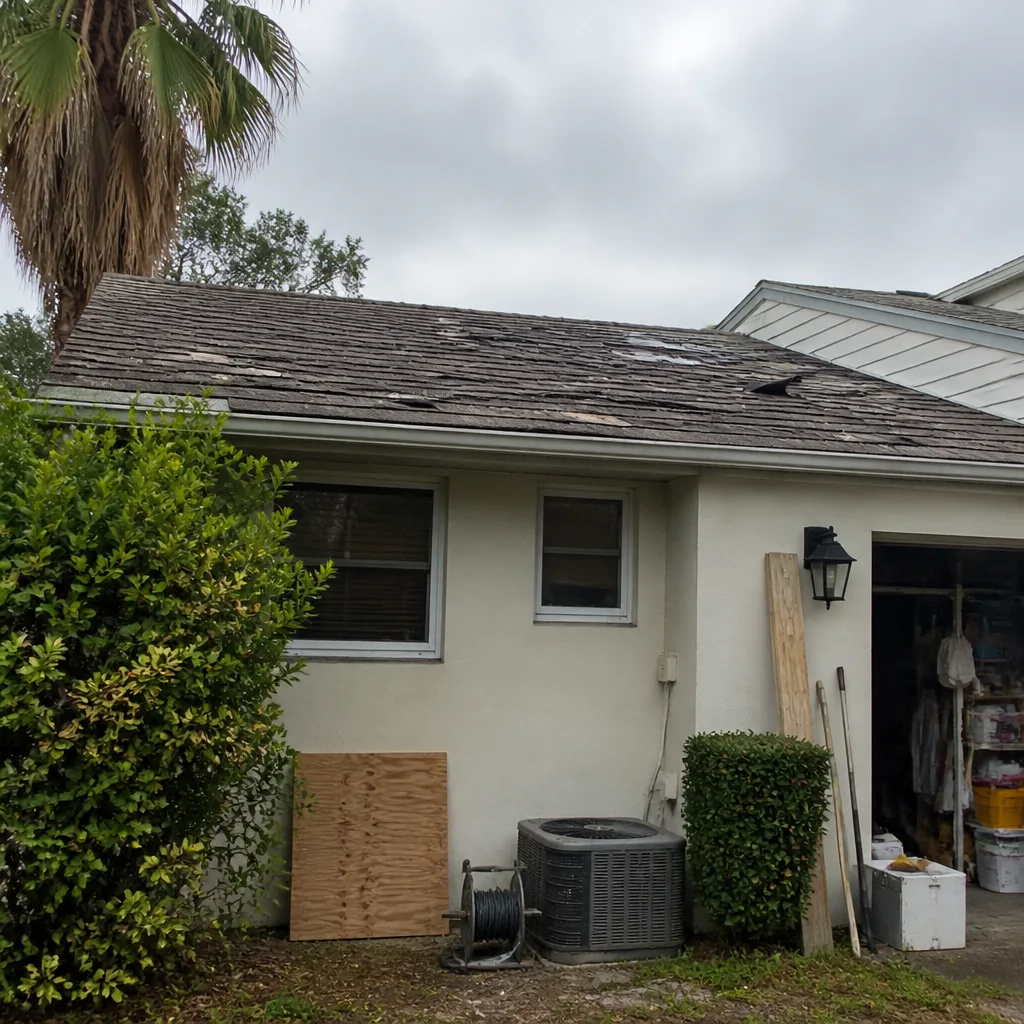 Before
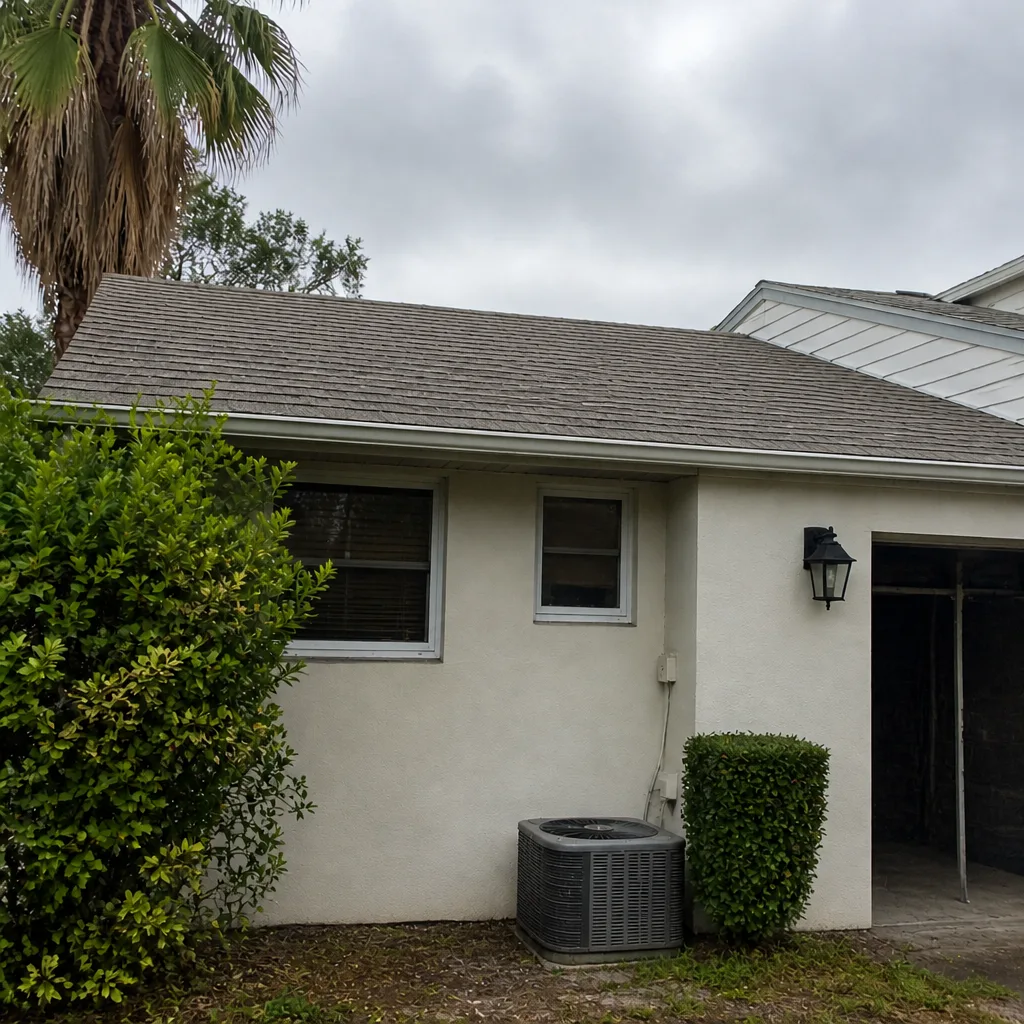 After
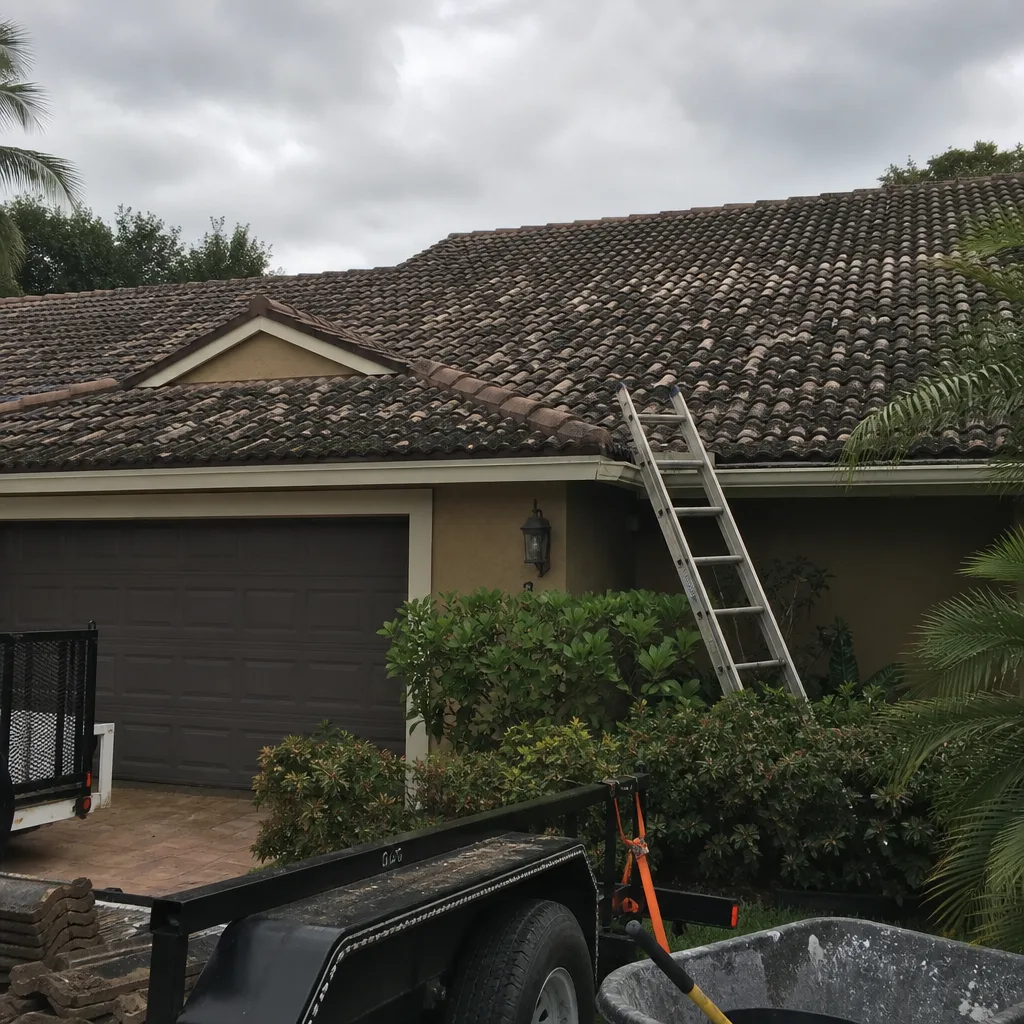 Before
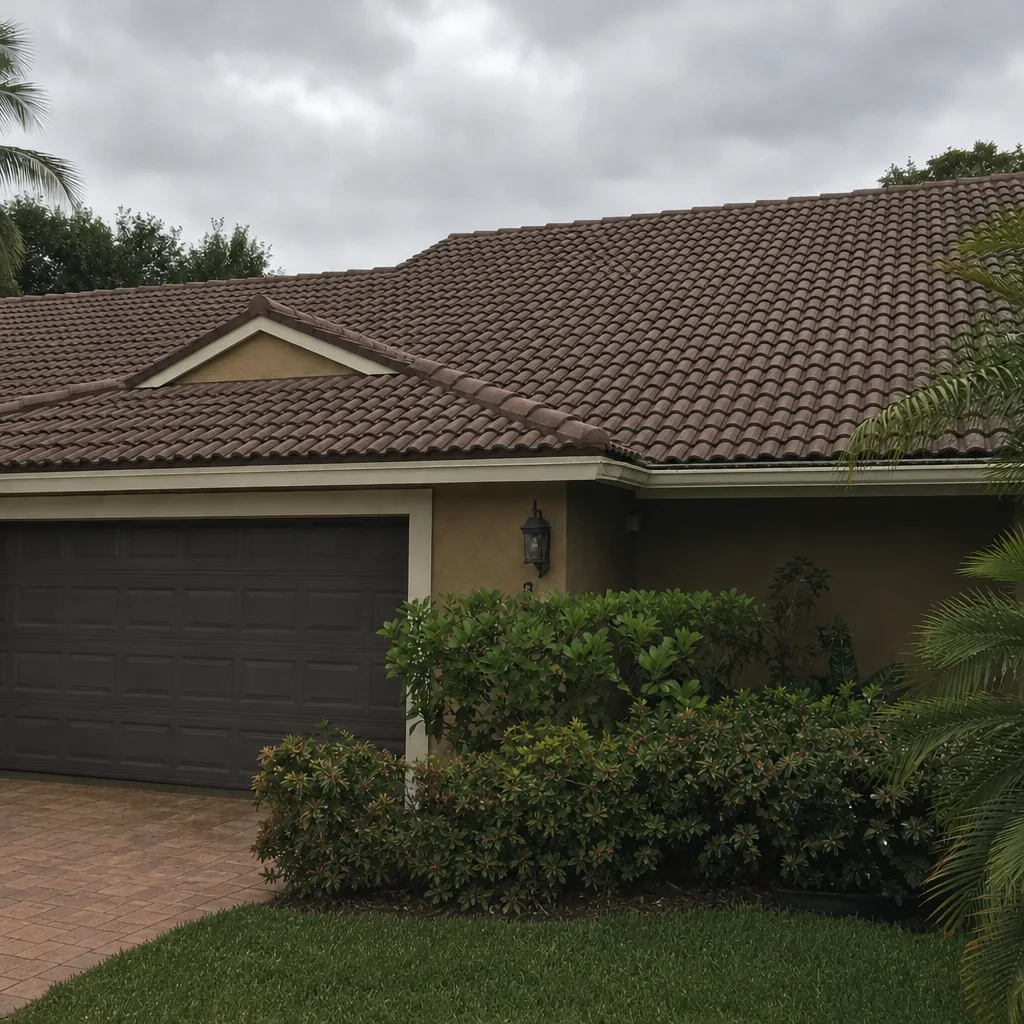 After
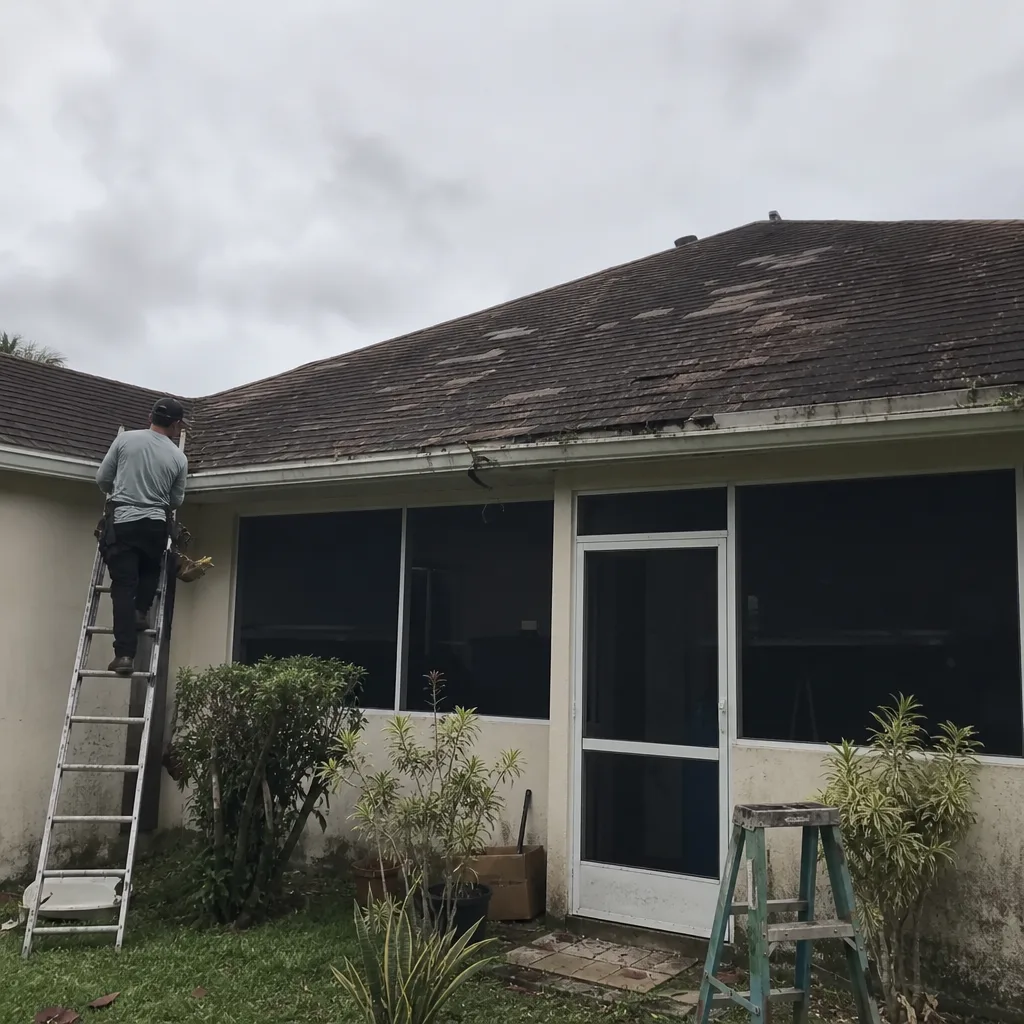 Before
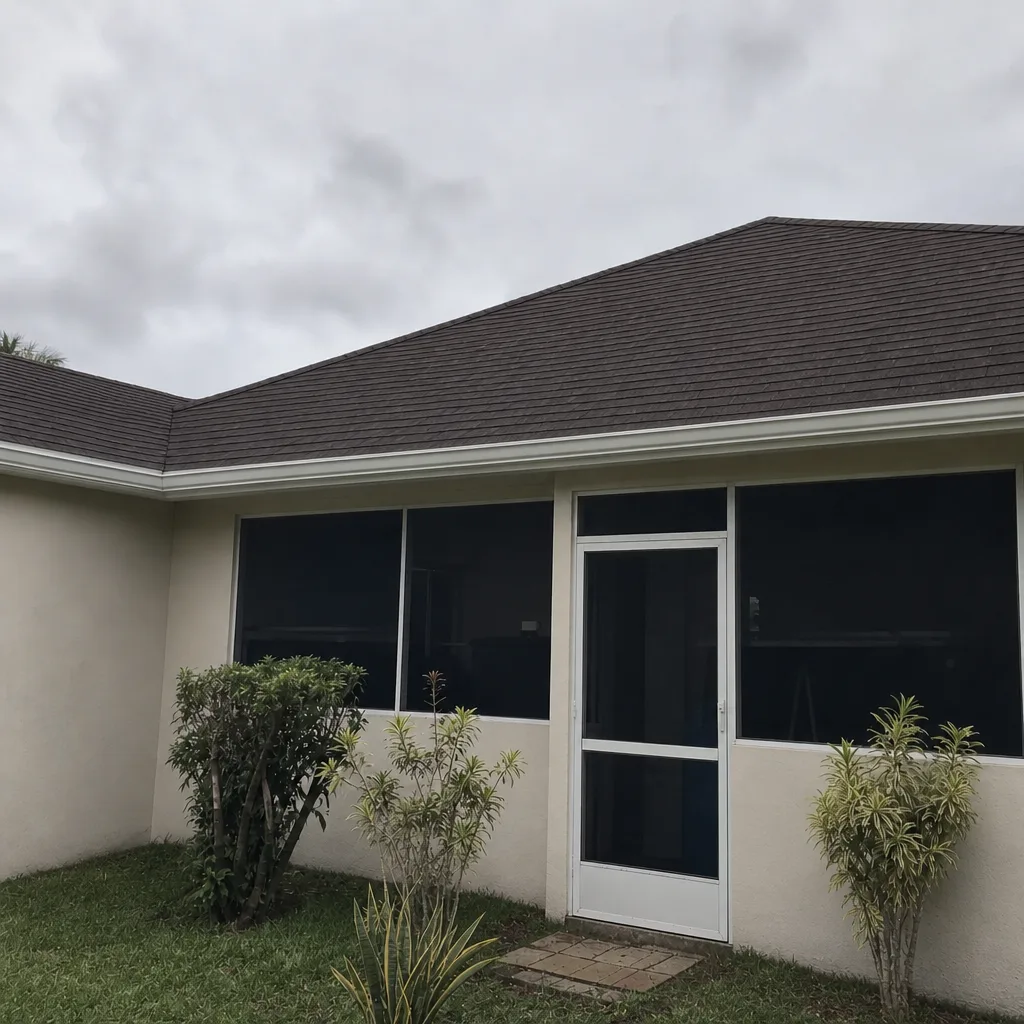 After
When to Call a Professional
Some roof work is a phone call, not a project you handle yourself. Call a professional if you see missing, cracked, or lifted shingles, if interior staining appears on a ceiling or wall, if granule accumulation shows up in your gutters, if any pipe boot or flashing looks separated, or if a storm has left you unsure whether your roof is sound. High areas, steep pitches, and wet shingles are genuinely dangerous, and a trained professional with fall protection should be the only person up there. If your roof is past the midpoint of its service life and you’re weighing a repair against a replacement, a documented inspection is the honest starting point.
Benchmark Roof Repair offers free estimates in Boca Raton, and our technicians have up to 15 years of experience. Call (866) 942-9891 to schedule yours. We answer 24/7, with fast dispatch from 7am to 7pm, Sunday through Friday.
Frequently Asked Questions
February through April is the best window. It’s the dry season, so repairs, coatings, and sealant work have the weather to cure properly, and full inspections can be done without fighting afternoon storms. Book early in that window, because spring demand rises as the hurricane season approaches. Call (866) 942-9891 for a free estimate, and we’ll find a time that works.
Yes, and May is the month to do it. Before June 1st, trim overhanging trees to 10 feet of clearance, check every pipe boot flashing, confirm attic ventilation isn’t blocked, clear the roof surface, and photograph everything for your records. A sound roof going into the season gives you a much calmer five months. Call (866) 942-9891 to book a pre-season inspection, and estimates are free.
First, stay off the roof. Wet shingles are dangerously slick, and wind adds a second hazard. Photograph the damage from the ground and inside the house, document the date and storm name, and place buckets under active drips. Then call for a professional inspection and a written scope before you agree to any repair or settlement. Call (866) 942-9891 – we answer 24/7, with fast dispatch from 7am to 7pm, Sunday through Friday.
It varies with material, installation quality, and how well the roof is maintained, and the biggest local factor is sun exposure. UV attack is the main driver of shingle aging here, and afternoon thunderstorms add wear on the windward slopes. That’s why a documented annual inspection matters more than a general estimate. Any lifespan figure you’re given should be tied to your specific product, not a blanket number. Call (866) 942-9891 to schedule an inspection and get an honest read on your roof’s remaining life.
That depends on your policy, and the details that matter are your deductible and the named-storm rules. Before filing, gather dated pre-season photographs, any inspection reports, receipts for prior work, and post-storm photos and notes. Then call us for a written scope, which insurers want to see. This isn’t legal or insurance advice, so review your own policy or speak with your agent. Call (866) 942-9891 for the inspection and written estimate you’ll need.
That’s an inspection question first, and it depends on the extent of the damage, the roof’s age, and whether the damage is isolated or widespread. A written inspection report makes the decision clear rather than guesswork. If a repair will get you through the season on a sound roof, that’s often the smarter move. Call (866) 942-9891 for an honest assessment before you commit to either path, and estimates are free.
The Bottom Line
Boca Raton’s roof calendar isn’t December and March. It’s June 1st and November 30th. Protect the roof in the dry months, prepare it in May, watch and document through the storm window, and plan in December and January before demand rises. The most expensive mistakes on a Boca Raton roof are timing mistakes: repairs put off until the wet season, pre-season prep skipped, records never built. Get a documented inspection in your dry window, know before you spend, and let the right material for your roof guide your choice among the seven leading brands we install. Our technicians have up to 15 years of experience, and we handle inspection, repair, and replacement from first look to final installation.
Call (866) 942-9891 for a free estimate. We answer 24/7, with fast dispatch from 7am to 7pm, Sunday through Friday. We set the benchmark on every roof.
Written by the team at Benchmark Roof Repair.