
Last updated November 15, 2026
 Architectural shingles
 Metal roofing
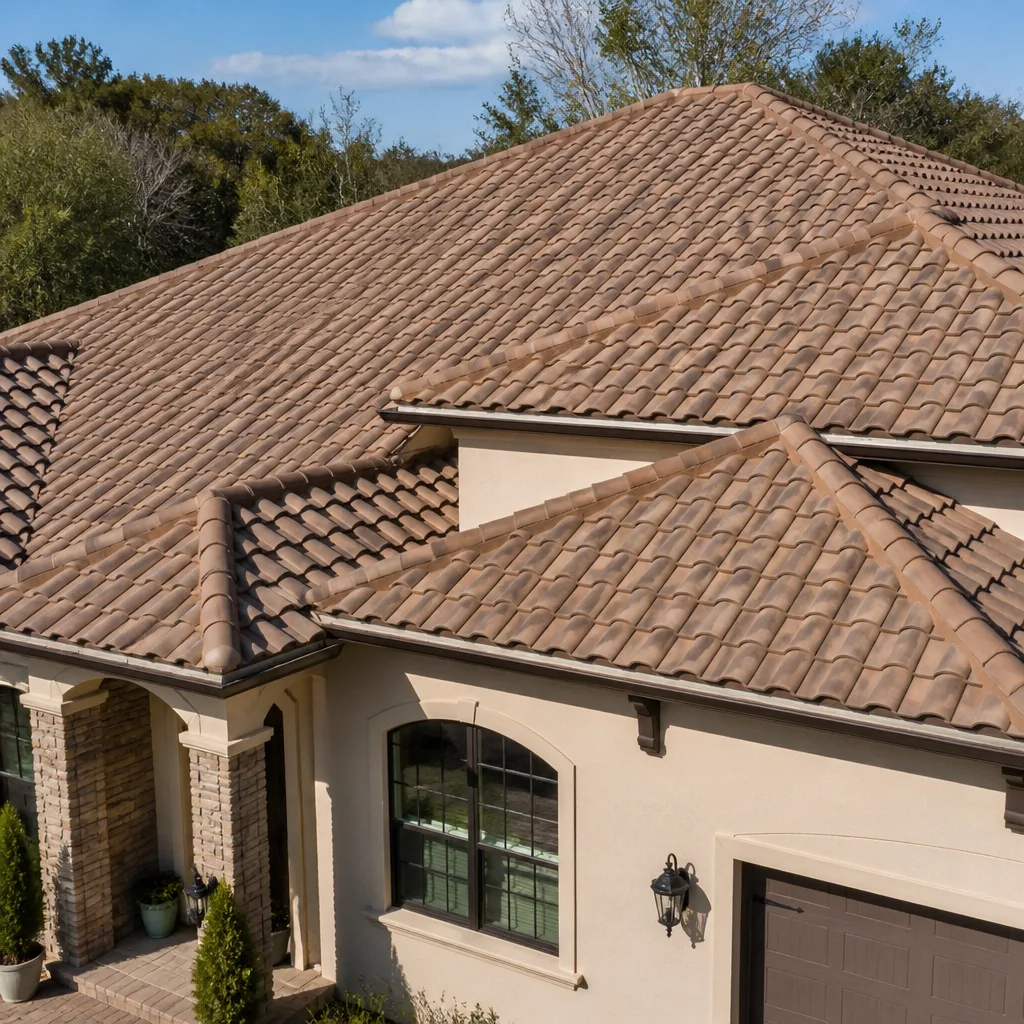 Tile roofing
 GAF
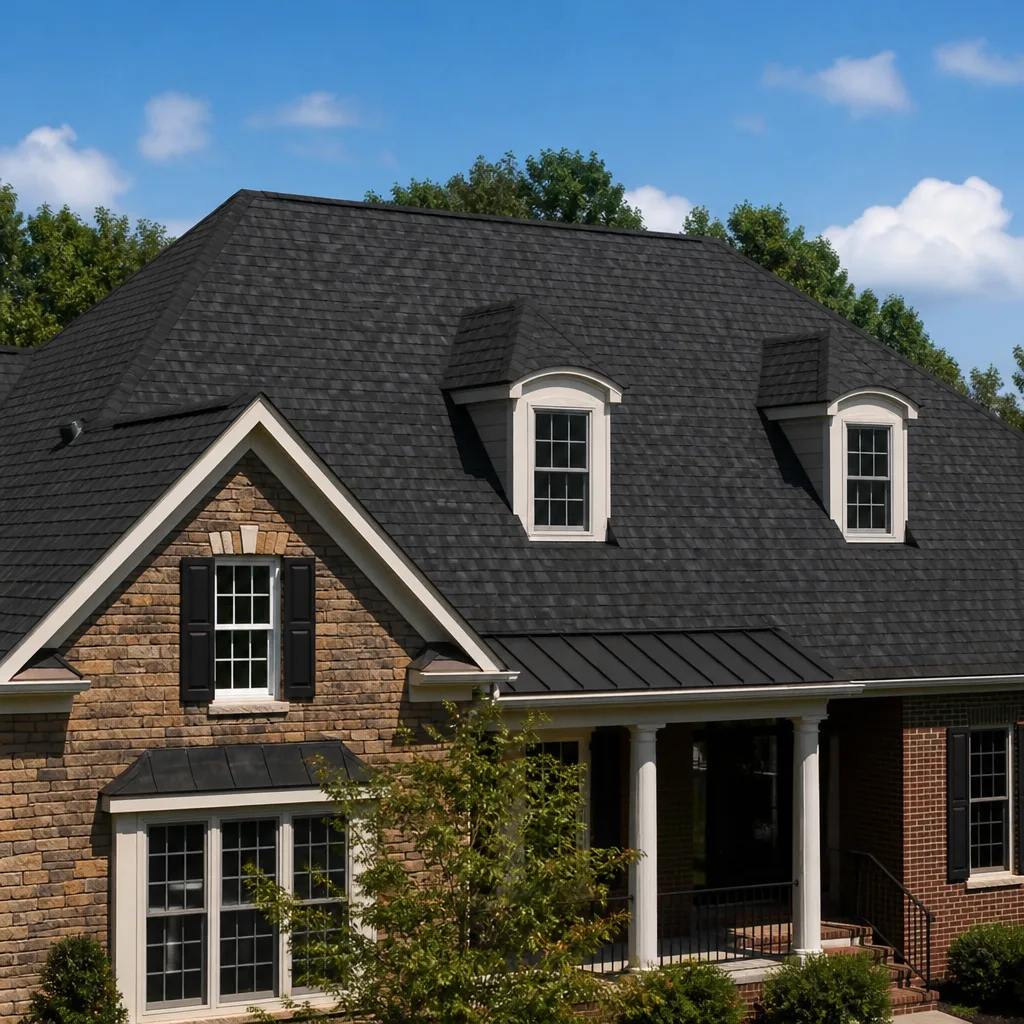 Owens Corning
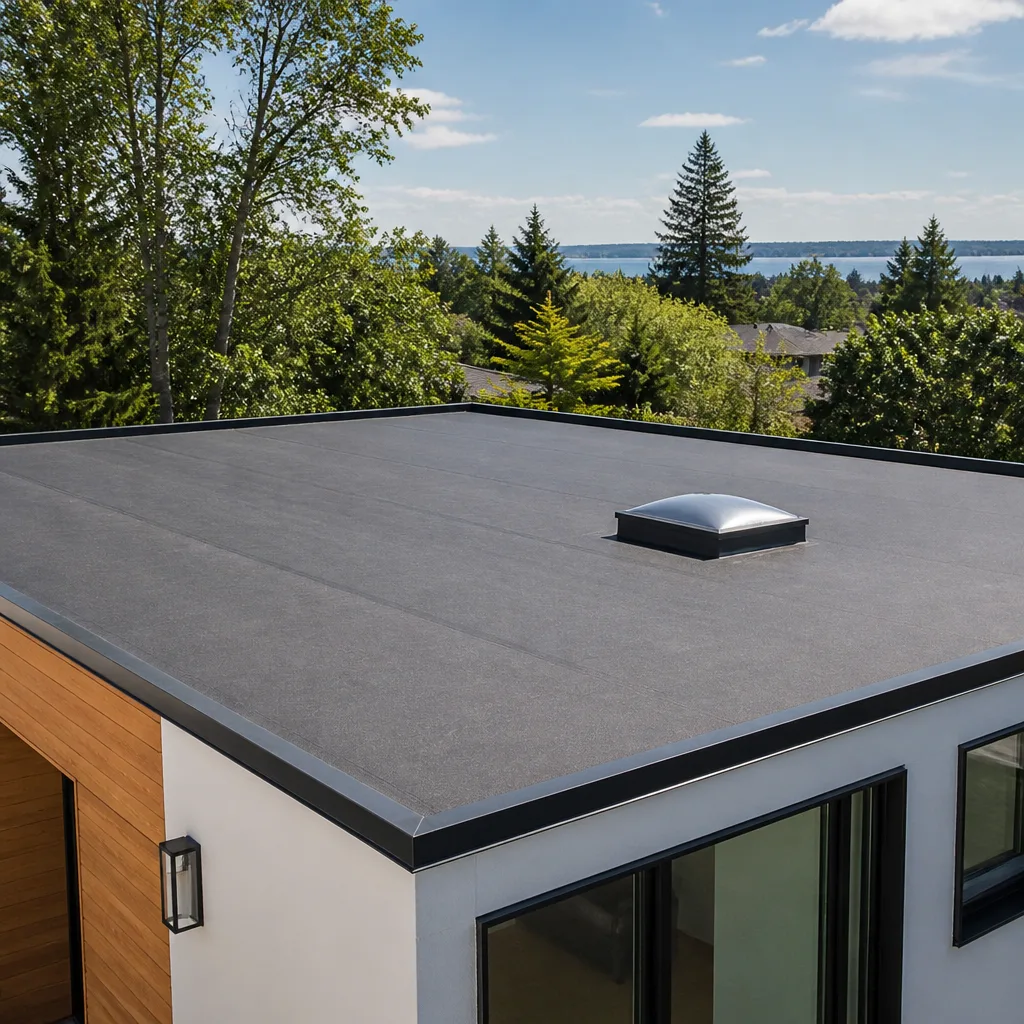 Flat & low-slope
Free roof inspection with deck photos before we talk money - GAF and Owens Corning certified installation
Roof Repair Troubleshooting in Boca Raton: Common Problems and How to Fix Them
The water stain on your ceiling isn’t where your roof is leaking. It’s just where the water stopped. In the driving rain events that roll through South Florida, water routinely travels several feet along sheathing, rafters and top plates before it finds a seam to drip through. Misreading that trail is the single most expensive mistake in residential roofing, because it leads to the wrong repair, the wrong estimate, and the same leak again after the next storm. This guide teaches you how to recognize patterns instead of guessing at symptoms, so you can describe what you’re seeing in Boca Raton in a way that gets an accurate diagnosis the first time.
Quick Answer
Most roof leaks in Boca Raton trace back to one of five failure points: pipe boot seals, valley flashing, ridge cap, skylight perimeters, and the transition where a flat or low-slope section meets a pitched roof. The visible drip is rarely the entry point, so troubleshooting means working backward from the stain toward the likely source using rain direction, roof geometry and the age of the flashing. A professional inspection confirms it before any repair begins.
Styles & brands we work with
- Architectural shingles
- Metal roofing
- Tile roofing
- GAF
- Owens Corning
- Flat & low-slope
Table of Contents
- How Do You Trace a Leak to Its True Origin?
- What Are the Five Most Common Roof Failure Points in Boca Raton?
- What’s the Difference Between Storm Damage and Wear and Tear?
- Why Do Flat and Low-Slope Roofs Fail Differently?
- What Can You Safely Document Before a Contractor Arrives?
- What Does Roof Repair Cost in Boca Raton?
- How Do You Know Whether to Repair or Replace?
- What Happens During a Professional Roof Inspection?
How Do You Trace a Leak to Its True Origin?
You trace a leak by following water uphill, not by staring at the stain. Water enters at a gap, runs along the path of least resistance, and only shows itself where it finally breaks through the interior surface. That run can span six feet or more on a low-slope roof. The stain marks the exit, never the entrance.
Boca Raton sits in a subtropical climate with two very different rain patterns, and both matter for diagnosis. Summer thunderstorms arrive with intense, near-vertical downpours and heavy volume over a short window. Winter and spring fronts bring wind-driven rain that pushes at a shallow angle against one face of the roof. These two patterns produce different leak signatures. A stain that appears only during driving wind-driven events points to a windward penetration: a lifted shingle edge, a failed seal at a wall junction, or a gap at the ridge. A stain that appears during any heavy rain, regardless of wind, often points to a horizontal surface problem like a clogged valley or a failed pipe boot that fills and overflows.
Here’s how to think about it in sequence:
- Note the timing. Does the stain darken within minutes of rain starting, or hours later? Immediate wetting suggests a direct path; delayed wetting suggests water is traveling and soaking through slowly.
- Note the wind direction during that storm. If the stain only appears when rain hits the east or south face, the source is likely on that side of the roof.
- Work backward along the ceiling plane. Water follows framing. Look for the stain’s highest edge and continue that line up the roof slope in your mind toward the ridge.
- Check the obvious penetrations in that line. Vents, pipe boots, skylights and chimneys sitting above the stain are the first suspects.
- Check the transitions. Anywhere the roof changes pitch, changes material, or meets a wall is a water trap, and traps fail before flat fields do.
In our experience across Boca Raton homes, the leak that shows up in a hallway ceiling most often originates at a plumbing vent boot on the opposite side of the ridge. The homeowner sees the drip and assumes the roof above it has failed. The actual gap is twenty feet away and the size of a thumb. Getting this right is the difference between a targeted repair and a wasted replacement.
What Are the Five Most Common Roof Failure Points in Boca Raton?
Five failure points account for the large majority of residential roof leaks here. They fail in a predictable order as a roof ages, and knowing that order helps you narrow the possibilities before anyone climbs up.
1. Pipe boot seals. The rubber collar around a plumbing vent pipe cracks and splits as it bakes in the sun. This is the number one leak source on pitched roofs in this climate because the rubber degrades long before the shingles around it do. A split boot lets water run straight down the pipe into the attic. The fix is usually a straightforward collar replacement, not a roof section.
2. Valley flashing. Valleys collect water from two roof planes and channel it at high volume. When the metal flashing underneath is exposed, corroded or improperly lapped, or when the shingles in the valley are worn thin, water pushes under instead of over. Valleys are also where wind-driven rain gets forced uphill against the shingle direction, which is why valley leaks often appear only in storms with a specific wind angle.
3. Ridge cap. The ridge is the most wind-exposed part of any roof. Ridge cap shingles take the full force of a front pushing across the roof, and the sealant strips under them can lift. Once a cap lifts, water drives under it and runs down both slopes.
4. Skylight perimeters. A skylight is a hole in the roof surrounded by a curb, and the seal where the glass or acrylic meets the frame plus the flashing where the curb meets the roof are both vulnerable. Perimeter leaks are common on Boca Raton homes built with skylights over kitchens and bathrooms, and they often read as condensation problems until a real inspection proves otherwise.
5. Flat-to-pitched transitions. Where a low-slope addition, garage or porch roof meets the main pitched roof, water from the large upper plane dumps onto a small lower one. The flashing at that junction has to handle concentrated flow, and when it’s under-built or has aged out, it fails. This is the failure point most often misdiagnosed, because the leak shows up far from the transition itself.
Older neighborhoods with a mix of original construction and additions tend to have more of the fifth type. If your home has a flat-roof section anywhere, read the next two sections carefully. They cover the diagnosis path that pitched-roof intuition gets wrong.
What’s the Difference Between Storm Damage and Wear and Tear?
Storm damage is a sudden, discrete event that a specific weather occurrence caused. Wear and tear is gradual deterioration from sun, heat, rain and age. The distinction matters because storm damage may be insurance-eligible while wear and tear almost never is, and adjusters look for specific physical evidence to tell them apart.
Hail is uncommon in Boca Raton. The storm damage that matters here is wind and wind-driven rain, plus the occasional falling limb. When an adjuster evaluates a claim, they’re looking for patterns that a single event would create:
- Directional uniformity. Damage clustered on one face or one slope of the roof, consistent with the wind direction of the reported storm, reads as storm-caused. Random scattered damage across all faces reads as age.
- Creased or lifted shingle tabs. Wind can crease a shingle where it bent back, leaving a visible line even after the tab settles. That crease is evidence of uplift.
- Torn or displaced flashing. Flashing that has been pushed out of position or torn away is almost always a force event, not gradual decay.
- Granule loss patterns. Granules worn thin across the whole roof indicate age. Fresh, localized granule scouring in one area can suggest impact.
- Interior evidence with a matching date. Water staining that begins in the same window as a documented storm is far stronger evidence than a stain of unknown age.
Wear and tear looks different. It’s the sun cracking the rubber boots. It’s shingles losing their granules uniformly. It’s sealant drying and pulling away at a consistent rate everywhere on the roof. Those are maintenance items and the repairs are the homeowner’s responsibility.
What you can do before any adjuster visits is document the timeline. Write down when you first noticed the problem, photograph the interior stains with a date reference, and photograph the roof from ground level. A contractor’s inspection report does the rest. We can work with your insurer when a storm claim is in play, and a documented inspection gives the adjuster what they need.
Why Do Flat and Low-Slope Roofs Fail Differently?
Flat and low-slope roofs fail through a different mechanism than pitched shingle roofs, and they need a separate diagnosis. On a pitched roof, gravity moves water off quickly and the shingle’s overlapping layers shed it. On a low-slope roof, water sits. It pools in the low spots, works at the seams and penetrations, and finds every weakness in the membrane.
Boca Raton has a lot of low-slope roof area: garage roofs, rear additions, porch covers, and the occasional commercial-style residential build. These sections are usually covered with a membrane system or a modified bitumen product from a manufacturer like Boral, and each has its own failure signature.
The leaks you’ll see on these roofs look different from pitched-roof leaks in three ways:
- They’re often chronic and slow. Water seeps through a membrane seam over weeks. You get a small, spreading damp patch rather than a dramatic drip.
- They concentrate at seams and penetrations. Membrane field is usually fine. Seams, drain points, and the base of anything poking through the surface are where the failures live.
- They show up far from the entry. Water that enters a flat roof can run along the deck under the membrane and exit at the edge or an interior wall, which is why the flat section itself sometimes looks perfectly dry.
Diagnosing a flat-roof leak requires understanding how water moves across that specific section: where the deck slopes, where it pools, where it drains, and how the flat section ties into the pitched roof above it. A pitched-roof diagnosis won’t find it. When we inspect a home with a flat section in Boca Raton, we treat it as a separate problem with a separate solution, and we recommend materials from a manufacturer like GAF or CertainTeed that fit the membrane type rather than forcing a shingle solution onto a surface that can’t take one.
If you want the broader picture of how flat-roof repair fits into the rest of the home, our roof repair team handles both pitched and low-slope diagnosis.
What Can You Safely Document Before a Contractor Arrives?
You can safely document leaks from ground level and from inside the home, and you should. What you must never do is climb onto a wet or steep roof. Wet shingles are slick, the roof pitch is deceptive from the ground, and a fall from a Boca Raton roofline is a serious injury. There’s no repair worth a hospital visit.
Here’s what to capture before anyone comes out:
- Photograph every interior stain with something for scale. Include the ceiling and any wall discoloration nearby.
- Photograph the roof from the ground at each face of the house. Use the widest setting on your phone and include the gutters and fascia so the roofline is visible.
- Note the date and time each stain appeared or grew, and what the weather was doing at the time.
- Check the attic if you have safe access from a permanent stair. Look with a flashlight for water staining on the underside of sheathing, wet insulation, and daylight at penetrations. Photograph it from the hatch.
- Record the leak’s behavior. Does it appear only with certain wind directions? Only after prolonged rain? Always?
- List any recent changes. New skylight? New roof over the addition? A tree limb that came down nearby?
Never do any of these: walk the roof, lean out an upper window onto a valley, poke at flashing with a tool, or attempt to seal anything yourself. Temporary tarping on a flooded interior is a professional task because it involves the same roof access risk. Anything you would have to climb to reach is a professional’s job. Bring the photos and the timeline to the inspection and the technician can connect what you saw with what they find.
If you’re already seeing active water inside the home, don’t wait. We answer 24/7 and can help you plan the next step. But the physical work is where the danger is, and that’s the part we keep in trained hands.
What Does Roof Repair Cost in Boca Raton?
Roof repair costs in Boca Raton typically run in bands that track the failure point, because the failure point determines the access, the materials and the labor. A pipe boot replacement is a different job from a valley rebuild, and pricing reflects that. Here are the plain-English categories and what each tends to involve:
- Pipe boot or vent collar replacement: the smallest repair on the list. Replace the failed collar, seal the shingle around it, done. Lowest tier.
- Ridge cap repair or rebuilding: remove damaged cap shingles, replace, re-seal. Mid-tier because it involves working the ridge line.
- Valley flashing repair: lift shingles, evaluate and often replace the metal, re-lay and re-seal. Higher tier because valley work requires careful removal and reinstallation.
- Skylight perimeter re-flashing: remove the curb flashing, rebuild the seal, reinstall. Higher tier and sometimes close to the cost of a partial roof section.
- Flat-to-pitched transition repair: the most involved single-point repair, since it may require re-flashing the junction and possibly re-membraning a small section of the flat roof.
For a firm number, the only reliable path is a written estimate after an inspection. Pricing someone else’s roof from the ground or over the phone produces guesses. A written line-item estimate tells you exactly what’s being repaired, with what material, and at what price, with no change orders once the work starts. That’s the standard we hold ourselves to, and it’s why the inspection comes first.
One note specific to this market: homes with mixed roof types cost more to diagnose and repair, because there’s more roof geometry to inspect and more material types in play. That’s not a padded price. It reflects the actual job.
How Do You Know Whether to Repair or Replace?
The repair-or-replace question is the one homeowners ask most, and the answer depends on the roof’s age, the extent of damage, and how many problems are present at once. A single failed pipe boot on an otherwise healthy roof is a repair. A roof with granule loss across every plane, multiple valley failures, and shingles that crease when you handle them is a replacement.
Here’s the decision framework we use:
- One problem, healthy field: repair. A targeted fix is cheaper and appropriate.
- Two or three related problems in the same area: repair, but inspect the surrounding area carefully. Sometimes a small section replacement is more honest than repeated patchwork.
- Multiple problems across different roof faces: replacement is often the more economical path once repairs start adding up. The math changes when each repair is temporary and the underlying cause is age.
- Roof approaching end of life with any leak: replacement. Repairing a failing roof you’re going to replace in two years is usually money spent twice.
If your inspection points toward replacement, our roof replacement service covers the other end of that decision, and because the same team handles both, there’s no second contractor to bring in if the scope changes. That continuity is one of the reasons we work with seven leading brands: Benchmark Roof Repair can recommend GAF, CertainTeed, Owens Corning, IKO, Atlas, Tamko or Boral based on what the roof actually needs, not on what a supplier agreement pushes us toward. Seven leading brands, one honest recommendation.
What Happens During a Professional Roof Inspection?
A professional roof inspection is a documented, non-destructive assessment of the roof’s condition, and it’s the step that separates a guess from a diagnosis. Benchmark Roof Repair offers inspection as a standalone service, so you can get the truth about your roof before committing to any repair or replacement spend. Know before you spend.
Here’s how a thorough inspection goes:
- Pre-interview. We review your photos and description so the inspection targets the likely failure point instead of starting cold.
- Exterior walk. We inspect from the roof surface and from the ground, checking every failure point named in this guide, plus granule condition, flashing attachment and membrane seams.
- Attic review. We look at the underside of the deck, the insulation, and the framing for water evidence and daylight, which often reveals the true entry point.
- Photo documentation. Every issue gets photographed so you can see what we see.
- Written assessment. We tell you what’s wrong, what’s fine, and what needs to happen next, in writing.
An inspection is not a sales visit. It’s the fact-finding step. Our technicians have up to 15 years of experience reading roofs in South Florida, and that experience is what turns your photos and description into an accurate diagnosis. The report becomes the basis for the estimate if a repair is needed, or the basis for a replacement quote if it isn’t. Either way, nothing happens until you have the facts.
Common Mistakes to Avoid
- Repairing the stain instead of the source. Patching the ceiling drywall without fixing the entry point means the stain comes back after the next rain. Always diagnose the roof before touching the interior.
- Climbing onto a wet roof. Wet shingles are slick, and the pitch is deceptive from the ground. Photograph from ground level and let a trained professional walk the surface.
- Letting a single inspection from a salesperson determine your roof’s fate. If the person inspecting is trying to sell you a full replacement on the same visit, get an independent documented inspection first. In Boca Raton, mixed-roof homes benefit from a second look before major decisions.
- Assuming flat-roof leaks are pitched-roof leaks. Flat sections fail at seams and penetrations, not at shingle fields. A pitched-roof diagnosis will miss it and the repair will fail.
- Skipping the storm damage timeline. If a storm damaged your roof, documenting when the interior stain appeared matters as much as the roof photos. Insurance adjusters need the timeline.
- Patching over a failing valley or transition. Caulk and sealant are temporary. If the flashing beneath is failing, a surface patch only postpones the repair.
- Choosing a roofer on price alone. The cheapest quote often means the wrong material for the roof, or a scope that skips the real problem. Fit and competence matter more than the lowest number.
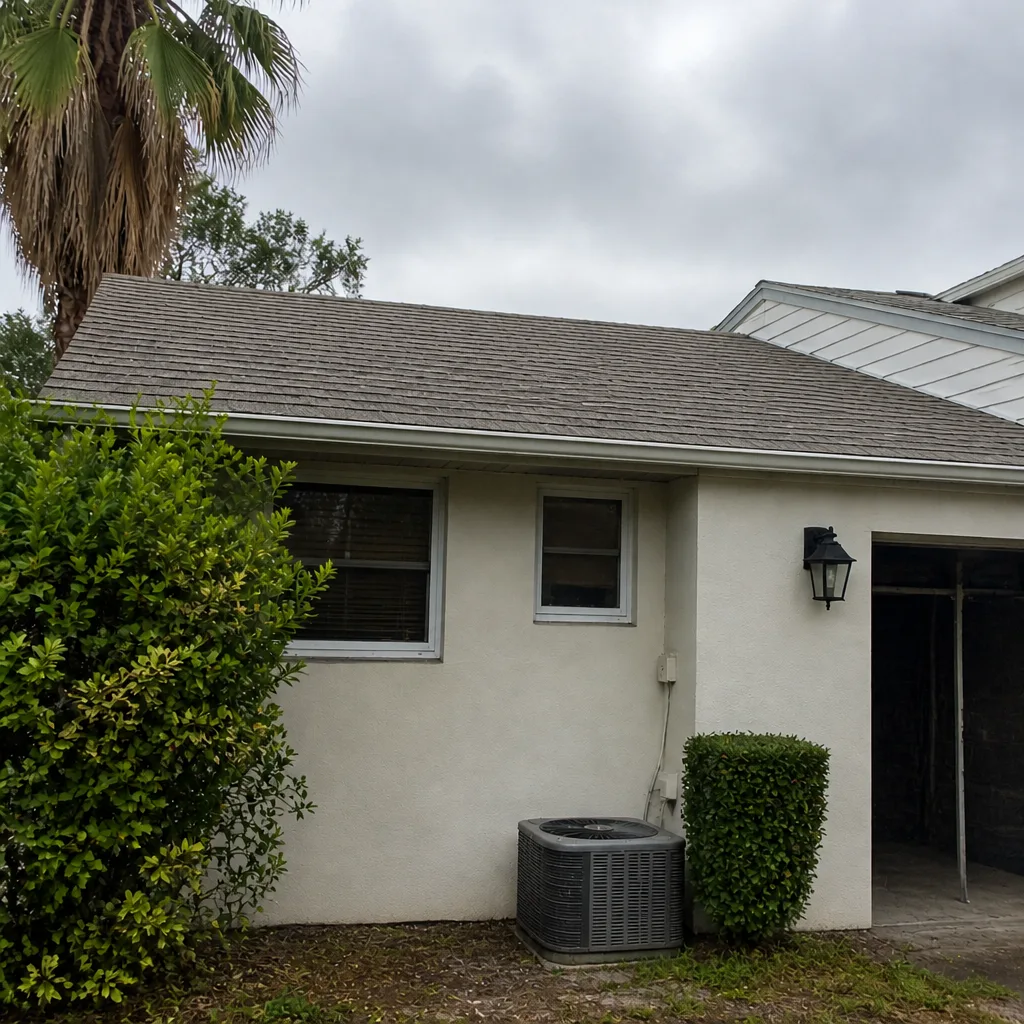
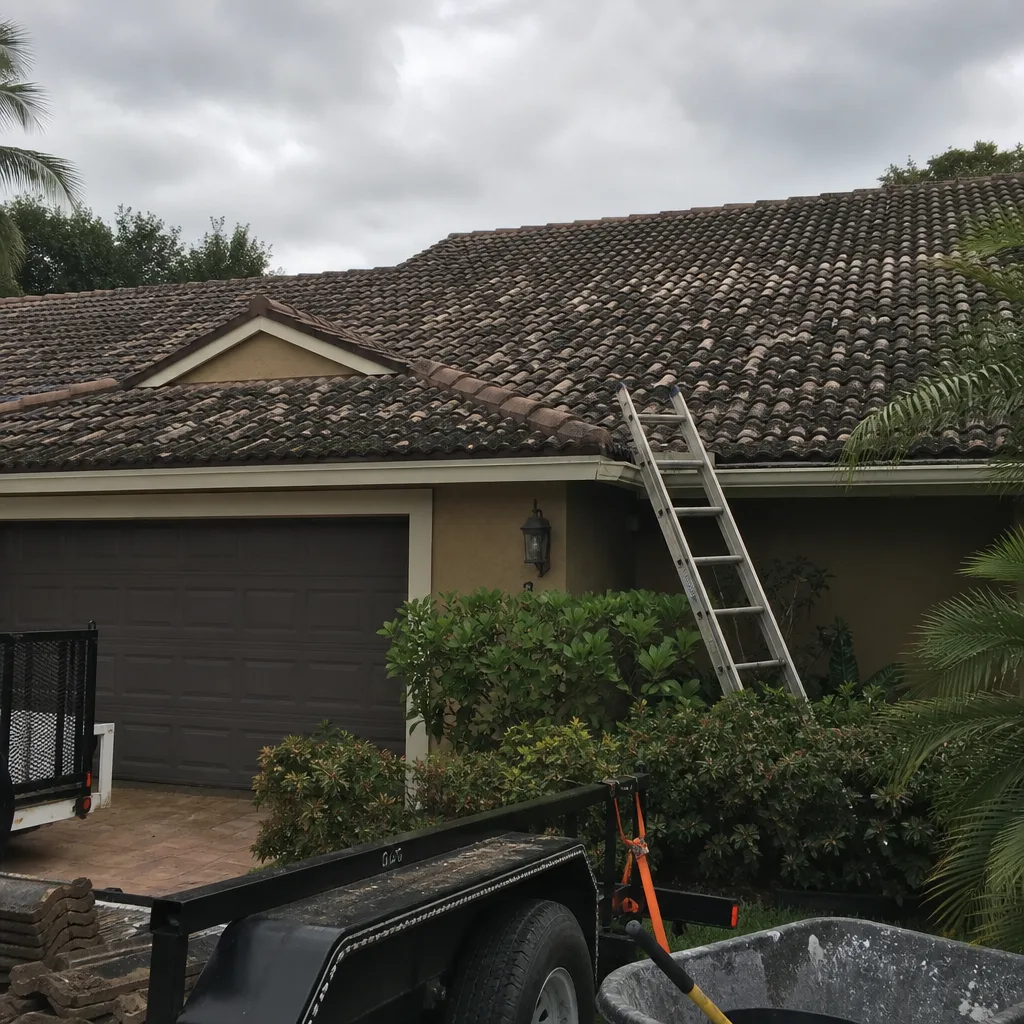
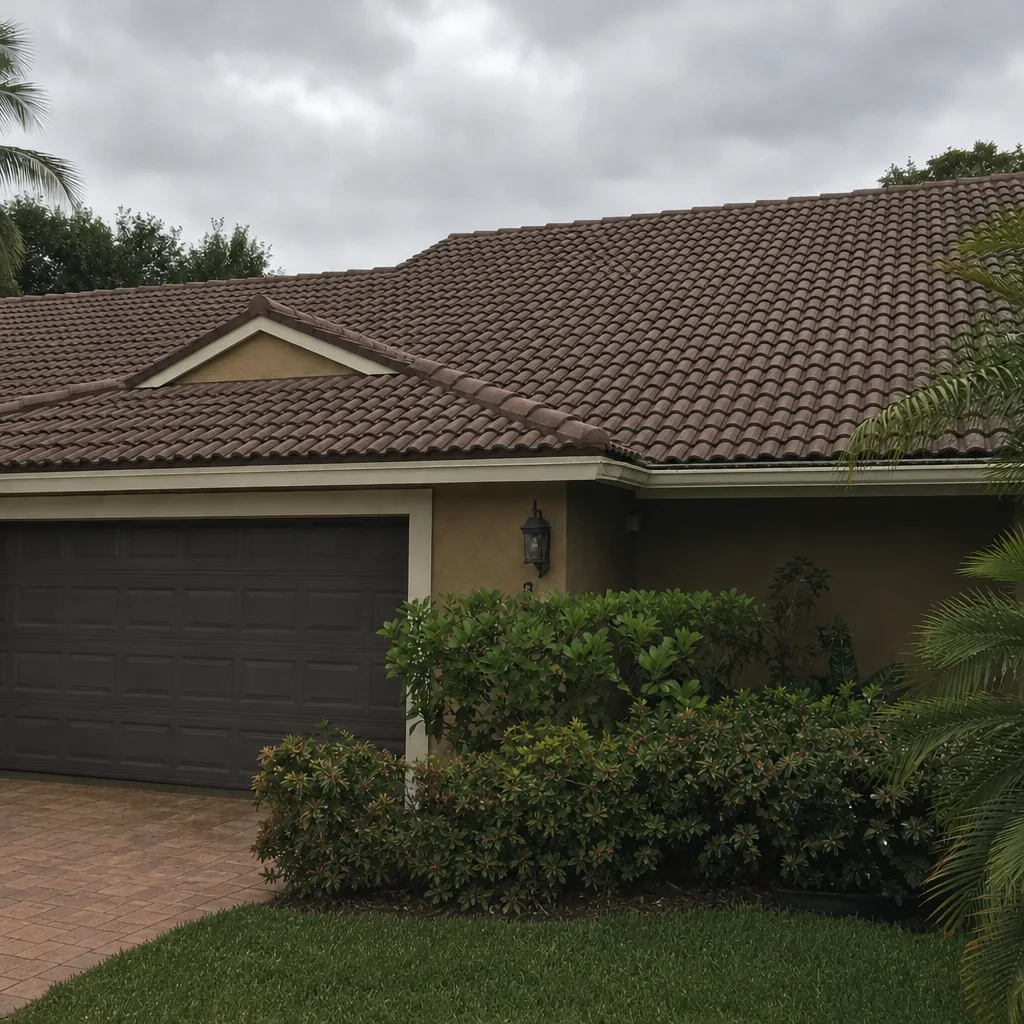
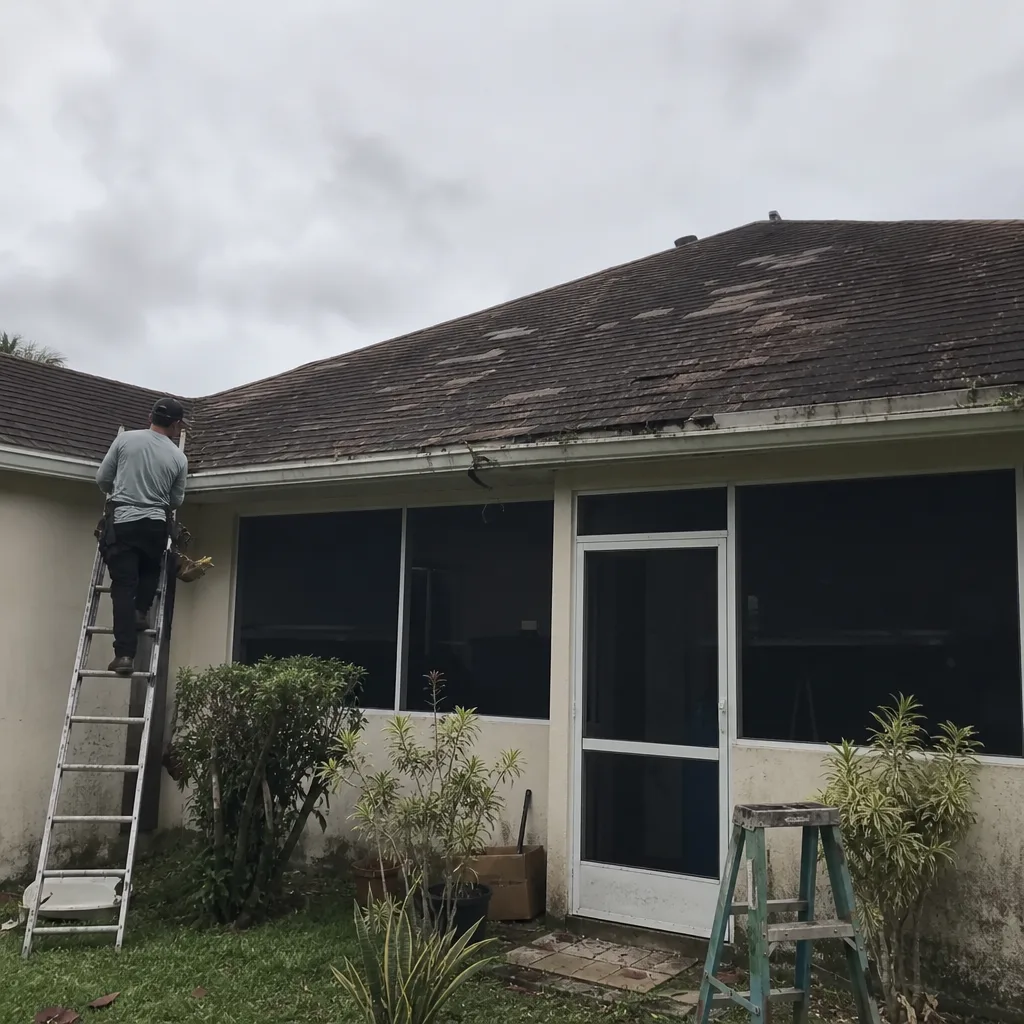
See the difference
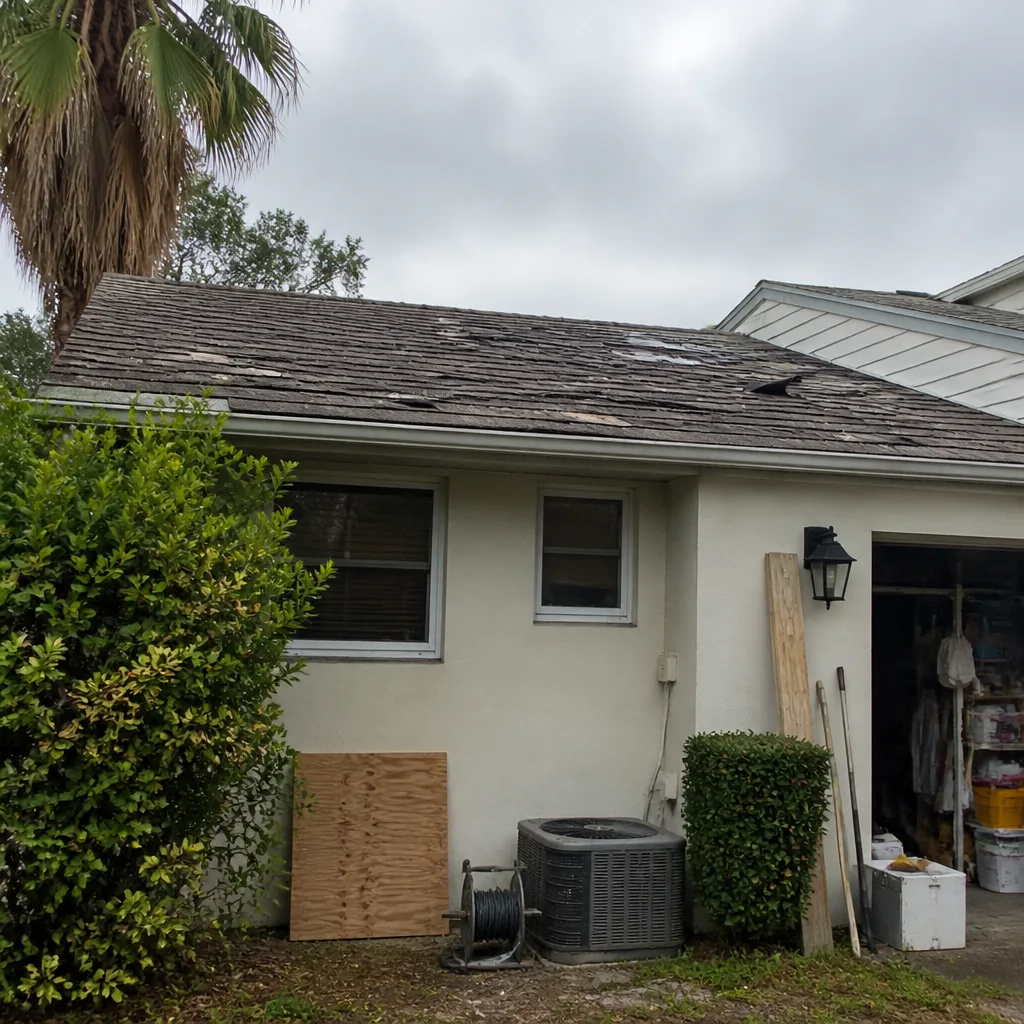 Before
 After
 Before
 After
 Before
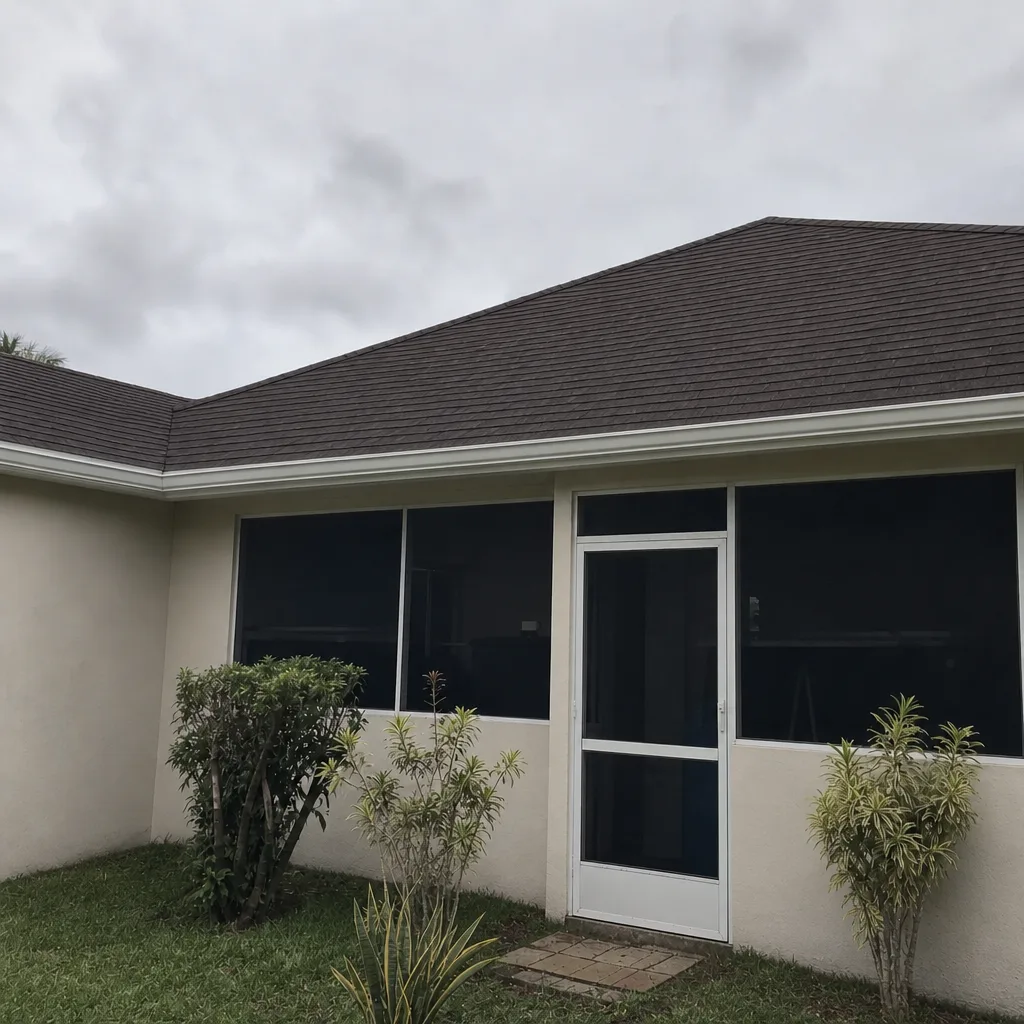 After
When to Call a Professional
Call a professional when water is actively entering the home, when a stain has grown or returned after a previous repair, or when you see creased shingles, torn flashing or multiple failed penetrations. Call when the roof is around the age when your neighbors are replacing theirs, and call when you’re about to sell or buy and want a documented condition report. Call after any storm that lifted shingle edges or dropped limbs near the roof, even if nothing’s leaking yet. And call if you’re uncertain, because “I think maybe there’s a problem” is a good enough reason to get an inspection. Benchmark Roof Repair offers free estimates in Boca Raton. Call (866) 942-9891. We answer 24/7. Fast dispatch from 7am to 7pm, Sunday through Friday.
Frequently Asked Questions
Roof repair in Boca Raton is priced per job based on the failure point, the material needed and the access required, and the written estimate sets the final number. A pipe boot replacement sits at the low end of the range, while a valley flashing rebuild or a flat-to-pitched transition repair sits at the high end. Call (866) 942-9891 for an exact quote, estimates are free.
Same-day repair is possible when the failure point is straightforward, such as a pipe boot or a ridge cap, and we confirm the diagnosis quickly. Complex leaks like valley or transition failures may need a documented inspection first so the repair targets the right source. Call (866) 942-9891 and we’ll tell you what’s realistic for your roof. We answer 24/7. Fast dispatch from 7am to 7pm, Sunday through Friday.
No. The written line-item estimate is the price, and the work stops and restarts only if a hidden problem is uncovered that changes the scope, which we discuss with you before proceeding. Fixed pricing with no change orders is the standard we hold on every job. Call (866) 942-9891 for a written estimate.
No. Water travels along framing and sheathing before it breaks through the ceiling, so the entry point is often several feet from the stain, and on flat or low-slope roofs it can be much farther. Tracing backward along the framing line toward the ridge is the correct approach. Call (866) 942-9891 to schedule an inspection that finds the actual source.
Yes, when a permit is required, the permit is pulled and the inspection passed before the job is closed. Whether a specific repair needs a permit depends on the scope and your city’s building department rules, and we confirm that as part of the estimate. Call (866) 942-9891 to ask about your specific repair.
Most single-point repairs are completed in a day, and larger scope work such as a valley rebuild or a multi-section repair may take longer. The estimate includes the expected duration, so you know before work begins. Call (866) 942-9891 for a timeframe specific to your roof.
The Bottom Line
Roof problems in Boca Raton follow patterns, and once you recognize them you can describe what you’re seeing accurately enough to get the right diagnosis on the first call. The stain is not the source. Water travels, and the entry point is usually uphill from the drip. Pipe boots, valleys, ridge cap, skylight perimeters and flat-to-pitched transitions account for most of what fails here, and flat roofs need their own diagnosis path. Storm damage and wear and tear leave different evidence, and documenting the timeline matters for insurance. What you can do from the ground is photograph, record and report. What you should never do is climb onto a wet or steep roof. From inspection to installation, Benchmark Roof Repair is here to set the benchmark on every roof we touch.
Call (866) 942-9891 for a free estimate. We answer 24/7. Fast dispatch from 7am to 7pm, Sunday through Friday.
Written by the team at Benchmark Roof Repair.