
Last updated November 15, 2026
 Metal roofing
 Architectural shingles
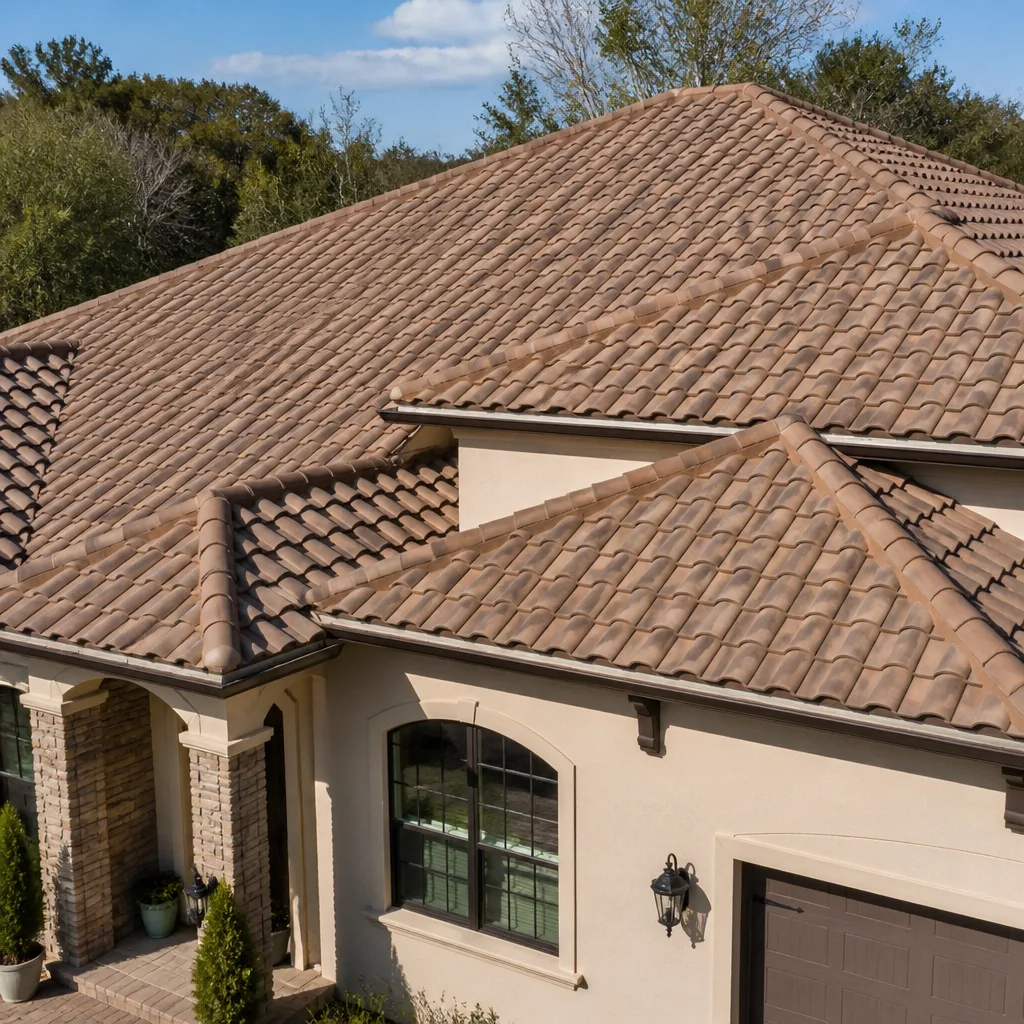 Tile roofing
 GAF
 Owens Corning
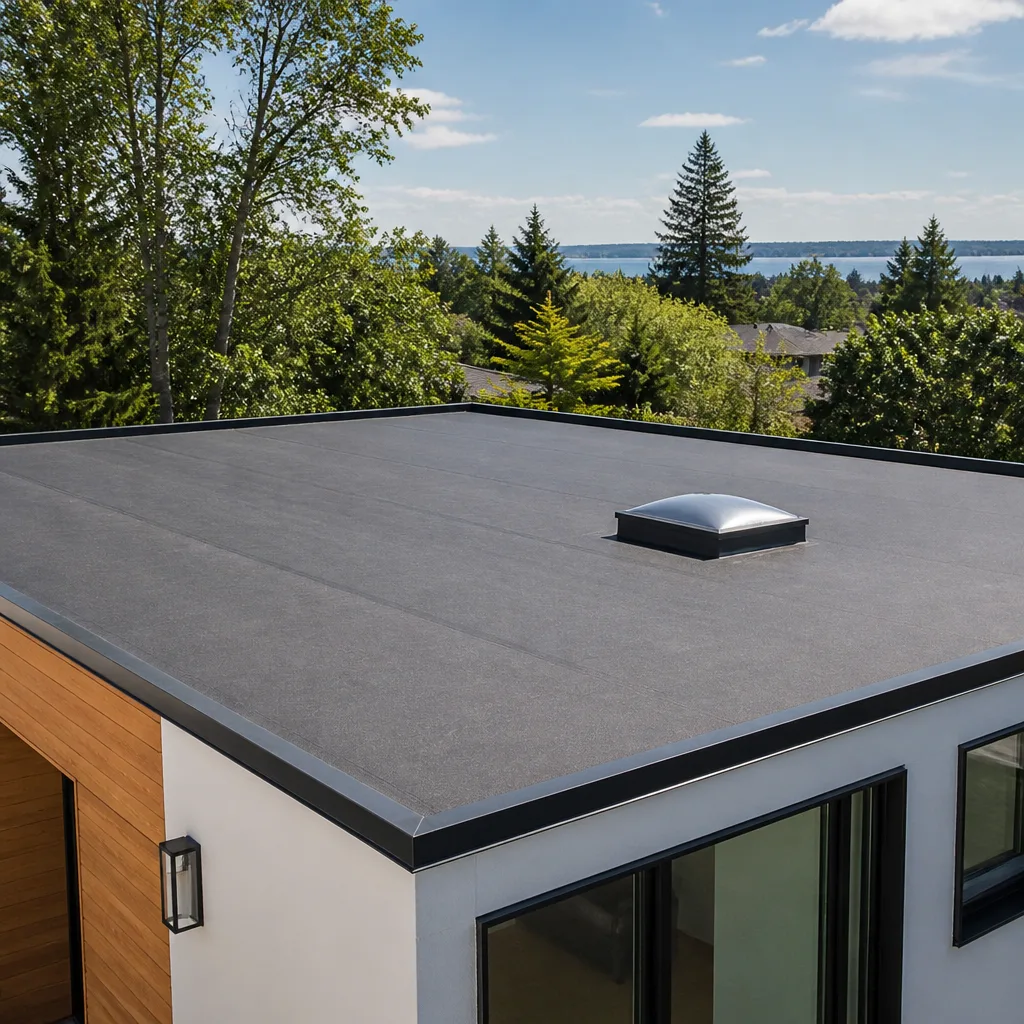 Flat & low-slope
Free roof inspection with deck photos before we talk money - GAF and Owens Corning certified installation
Roofing Warning Signs: A Boca Raton Homeowner’s Reference Guide
Most roofing articles describe damage that’s already past the point of an economical repair. That’s the wrong list for a Boca Raton homeowner. The signals that actually matter here are the quiet ones – the ones that show up 12 to 36 months before a roof fails, when a targeted repair still makes sense and a full replacement is still a decision rather than an emergency. Granule loss in a gutter isn’t simply a sign your roof is getting old. Under Boca Raton’s solar exposure, a heavy pattern across more than one downspout drainage area can mean you’re three to five years from replacement. This guide walks through what to look for, where to look, and what each signal usually means.
Quick Answer
The warning signs that matter most in Boca Raton are granule accumulation in gutters across multiple downspouts, attic humidity readings holding above 60%, staining on the underside of the roof deck that hasn’t yet reached the ceiling, shingles that lift or cup along ridges even on newer roofs, and dark streaking that runs beyond a simple algae stain. Any one of these is worth a professional look. Two or more together usually point to a ventilation or moisture problem underneath the shingles, not just wear on top.
Styles & brands we work with
- Architectural shingles
- Metal roofing
- Tile roofing
- GAF
- Owens Corning
- Flat & low-slope
Table of Contents
- Granule Loss: Normal Shedding vs. UV-Accelerated Breakdown
- Interior Warning Signs Most Homeowners Miss
- Why Lifted and Cupped Shingles Usually Point Downward
- Flashing Failures Specific to Florida Thermal Cycles
- Algae Staining vs. Growth That’s Eating the Shingle
- What a Roof Inspection Actually Looks At
- Reading the Timeline: Repair, Watch, or Replace
Granule Loss: Normal Shedding vs. UV-Accelerated Breakdown
Every asphalt shingle sheds granules. That’s by design. The mineral surface is sacrificed over time so the asphalt underneath stays protected. The question isn’t whether you find granules, it’s how much and where. A few dozen at the base of one downspout after a heavy rain is ordinary. Granules filling the elbow of every downspout drainage area on the same side of the house is a different conversation.
Boca Raton sits in one of the more intense solar exposure bands in the country. The UV load here ages asphalt faster than the same shingle would age in a milder climate, which compresses the timeline between “normal aging” and “surface failure.” We see three patterns worth knowing:
- Scattered granules, uniform across downspouts. Normal wear. Monitor annually.
- Heavy granule deposits at one or two downspouts, bald patches visible on the same slope. UV breakdown concentrated on the sun-facing plane. Worth an inspection now, before the asphalt underneath starts to craze.
- Heavy deposits at most downspouts and visible dark substrate showing through. The shingle has lost its protective layer. This is the pattern that tends to line up with a replacement decision in the next few years, especially on roofs past the midpoint of their service life.
The trap is treating “some granules in the gutter” as either totally fine or totally alarming. Neither is accurate. Get an honest baseline – Benchmark Roof Repair offers inspection as a standalone service precisely so a homeowner can know the condition before spending anything on repair or replacement. Walk the perimeter after a heavy rain and note which downspouts are receiving granules. That map is more useful to an inspector than any description over the phone.
Interior Warning Signs Most Homeowners Miss
The ceiling is the last place moisture shows up, not the first. By the time a brown ring appears on drywall, water has usually been moving through the assembly for a while. The useful signals are earlier and they’re inside the attic, not in the living space.
Two readings we recommend every Boca Raton homeowner take twice a year:
- Attic humidity. A simple hygrometer left in the attic for a few hours gives a number. Readings holding above 60% in a vented attic point to inadequate ventilation, an active leak, or both. South Florida’s ambient humidity means the attic has less margin for error than attics in drier climates.
- Deck staining from underneath. A flashlight aimed up at the roof sheathing from inside the attic shows what the ceiling can’t yet. Dark staining, tide lines, or soft spots on the underside of the deck mean moisture is trapped between the shingle and the wood. That staining often shows up months before the ceiling does.
Other interior signals worth noting:
- Daylight visible between deck boards or at penetrations when the attic is dark.
- Rust on nail points poking through the sheathing – a sign of prolonged moisture, not a one-time event.
- Musty smell in the attic that’s stronger on humid mornings than dry afternoons.
- Sagging or wavy roofline visible from the street, which often means the deck has absorbed moisture.
An attic humidity reading and a deck stain that hasn’t reached the ceiling yet are the two signals that buy a homeowner the most time. They’re also the two most often skipped. If either shows up, it’s worth scheduling a proper roof repair assessment before the drywall tells you the same story at a higher cost.
Why Lifted and Cupped Shingles Usually Point Downward
A shingle that lifts at the ridge or cups at the edge looks like an age problem. In Boca Raton, it’s often a ventilation problem showing through the shingles. Shingles don’t lift because they’re old; they lift because the deck beneath them is holding heat and moisture the roof can’t shed fast enough. The shingle is the messenger.
Here’s the mechanism. A roof assembly with inadequate intake or exhaust ventilation traps hot, humid air in the attic. That air migrates up to the deck, condenses, and warms the sheathing unevenly. The shingles above expand and contract with the deck. Adhesive strips weaken. Edges lift. Once that pattern starts, replacing the lifted shingles without addressing the ventilation below resets the clock without stopping it. We’ve seen it happen on roofs that were only a few years old.
Signs that lifted shingles are a ventilation symptom rather than simple wear:
- Lifting concentrated along ridges, hips, or the upper third of the slope, rather than uniformly.
- Cupping on multiple elevations at once, including shaded sides.
- Shingles that look intact in the field but lift at every ridge cap.
- Attic temperatures noticeably hotter than outdoor air on a still afternoon.
When we inspect a roof with lifted shingles, the conversation is about the whole assembly – intake vents, exhaust vents, deck condition, and shingle condition – not just the shingle. That’s part of what “Benchmark” means to us: the fix has to hold, which means fixing the cause. Working across GAF and Owens Corning product lines gives us the ability to match the replacement material to what the roof actually needs, rather than steering toward whatever a single supplier carries.
Flashing Failures Specific to Florida Thermal Cycles
Flashing is the metal or membrane that seals the roof at every interruption: skylights, chimneys, HVAC curbs, vent pipes, and wall transitions. In Boca Raton, flashing takes more punishment than the shingle field because it’s constantly expanding and contracting through South Florida’s thermal cycles. Metal heats to a much higher surface temperature than shingle, then cools overnight. That daily cycle works sealant and fasteners loose over time.
Flashing failures tend to start at the seams, not the center. Watch for:
- Skylight curbs. Cracked sealant along the curb, lifted step flashing at the corners, or condensation on the inside of the glass that never dries. Each of these can let water past without any sign on the ceiling above.
- Chimneys. Missing counter-flashing, rusted step flashing, or gaps at the chimney-to-roof transition. Brick absorbs moisture, and the flashing has to account for that movement.
- HVAC curbs. Sealant pulling away from the curb edge is common on Boca Raton roofs, because the curb sits in full sun all day and the sealant cures faster than it would in a milder climate.
- Pipe boots. The rubber collar around a plumbing vent cracks and splits. It’s a small part and a common leak source.
Flashing leaks are often invisible from inside until the water has traveled through the deck and along a framing member. That’s why flashing inspection is one of the first things a proper roof inspection checks. If you can see daylight at a flashing seam, or if the sealant is cracked and lifting, get it looked at before the next stretch of rain.
Algae Staining vs. Growth That’s Eating the Shingle
Dark streaks running down a roof in Boca Raton are usually algae – specifically, a type of algae that feeds on the limestone filler in asphalt shingles. It’s cosmetic. It doesn’t eat the shingle. That’s the good news, and it’s the case on the majority of streaked roofs we see here. The distinction that matters is between streaks that stay on the surface and growth that’s actually breaking down shingle material.
How to tell the difference:
- Algae streaks run vertically and stay dark blue-green to black. They follow the water path and live on the surface.
- Cosmetic stains clean off with a light wash (we don’t recommend pressure washing, which can strip granules).
- Biological growth that’s damaging the shingle often shows as green or gray patches, lichen crusts, or moss in shaded or north-facing areas that hold moisture longer. Lichen in particular can lift granules and trap water against the shingle.
- Fungal growth on the shingle tends to look fuzzy or powdery and often sits at the seams where water pools.
Lichen and moss are the growth forms to take seriously. They hold moisture against the shingle surface and can pry granules loose in a way that simple algae never does. Shaded elevations and tree-adjacent slopes are where they show up first. A copper or zinc strip installed along the ridge is one common mitigation, but the roof needs to be inspected first to confirm the growth isn’t already doing damage underneath. If streaks are the only issue and they’re purely cosmetic, a homeowner has time. If growth has a texture, get it assessed.
What a Roof Inspection Actually Looks At
A roof inspection is a documented condition assessment. It’s not a sales call and it shouldn’t become one. When we inspect a roof in Boca Raton, we’re building a baseline that a homeowner can use to make repair or replacement decisions – now and in later years. The point of the inspection is to know before you spend.
Here’s what a useful inspection covers:
- Roof surface. Shingle condition, granule retention, lifted or cupped shingles, and evidence of UV breakdown.
- Flashing. Every penetration – skylights, chimneys, HVAC curbs, pipe boots, wall transitions – with sealant and metal condition noted.
- Deck condition. Sheathing soundness, staining from the underside, and any evidence of prolonged moisture.
- Attic. Humidity reading, ventilation assessment (intake and exhaust), insulation condition, and evidence of active or past leaks.
- Drainage. Gutter condition and downspout mapping, including granule accumulation. This is where we gather the evidence that distinguishes normal wear from UV-accelerated breakdown.
- Documentation. A written summary of what’s there, what’s normal, and what needs attention – with photos.
That last step matters. A verbal inspection is a memory test. A documented one gives a homeowner something to compare against next year and a reference point if they decide to sell. It also gives the inspector an honest baseline to check against when the repair-versus-replace question comes up later.
Reading the Timeline: Repair, Watch, or Replace
The whole reason to look for early warning signs is to avoid a rushed decision. When a roof is still in the 12-to-36-month window before failure, the homeowner gets to choose between repair, replacement, and watchful waiting. Once the warning signs are past that window, the choice narrows fast. Here’s how to think about the timeline.
- Repair. Isolated damage – a few lifted shingles, a single failed pipe boot, one flashing seam. The rest of the roof is sound and the issue is localized. A targeted repair is often the right call.
- Watch. Early signals that haven’t escalated – light granule accumulation at one or two downspouts, an algae stain that’s purely cosmetic, an attic humidity reading near the upper edge of normal. Document, monitor, re-inspect in 12 months.
- Replace. Multiple slopes showing the same failure pattern, bald shingle areas, deck staining visible from the attic, or an aging roof with more than one issue at once. At that point, patching resets the clock without stopping it – and a full roof replacement is the more economical path.
The single biggest mistake we see in Boca Raton is treating a whole-roof problem with a spot repair because the spot repair is what a homeowner expected to need. A documented inspection is the way to avoid that. It’s also the way to know whether a repair makes sense today or whether the roof will ask for the same money again in 18 months.
Common Mistakes to Avoid
- Treating granules in one gutter as proof of failure. Granule loss is a pattern, not a single event. Map which downspouts are collecting granules across the whole roof before drawing a conclusion.
- Ignoring attic humidity. A reading above 60% is worth investigating no matter how the shingles look. It can point to ventilation or leak issues that haven’t reached the ceiling yet.
- Replacing lifted shingles without checking ventilation. Fixing the visible symptom while leaving the cause in place wastes the repair money. The shingles will lift again.
- Pressure washing algae stains. It’s a common reaction to dark streaks, and it strips granules. A gentle wash or a professional treatment is the right approach.
- Panicking over cosmetic algae. The majority of dark streaking in South Florida is cosmetic. That doesn’t mean ignore it, it means don’t let the streak alone push you into a replacement.
- Making repair-or-replace decisions from the ground. Lifted shingles and failed flashing look similar from 30 feet up. A proper inspection tells you which is which.
- Skipping the written inspection summary. A verbal report is easy to forget and impossible to compare year over year. Get it documented.
See the difference
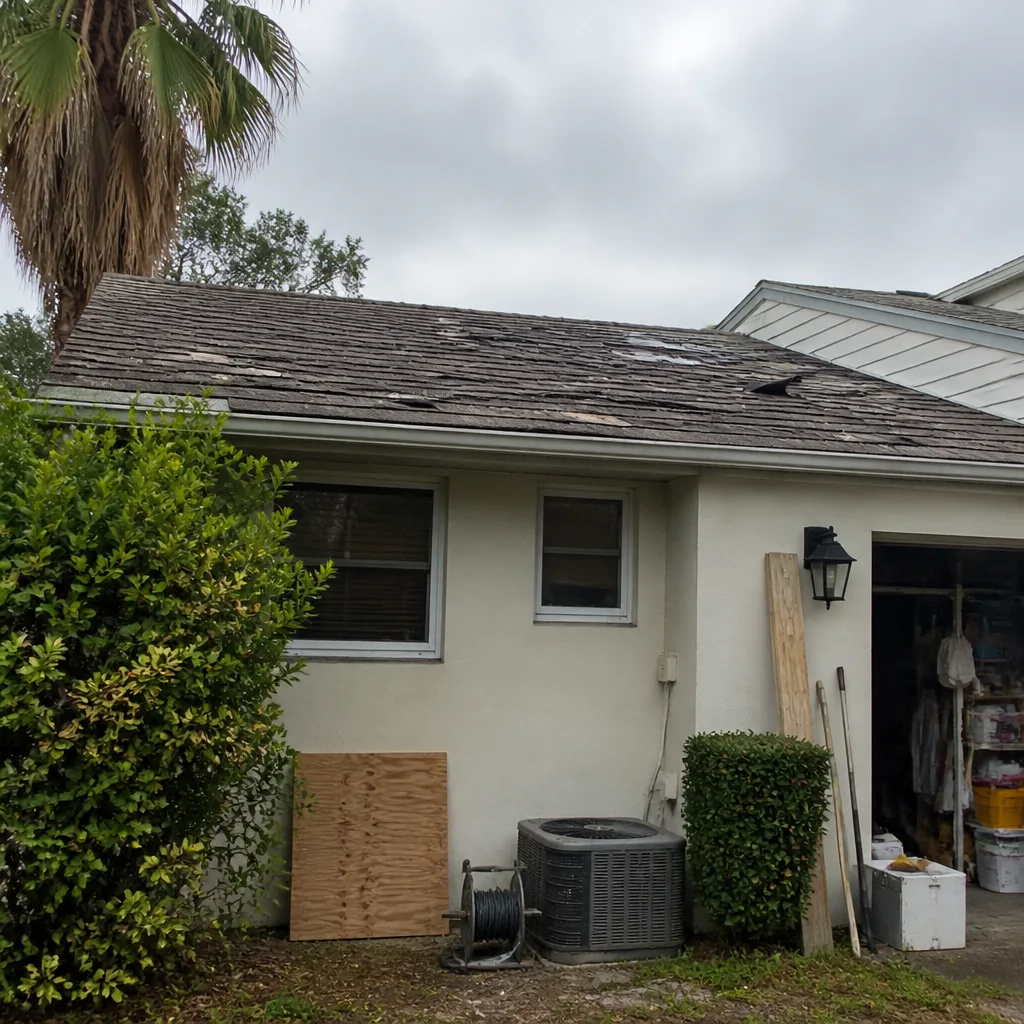 Before
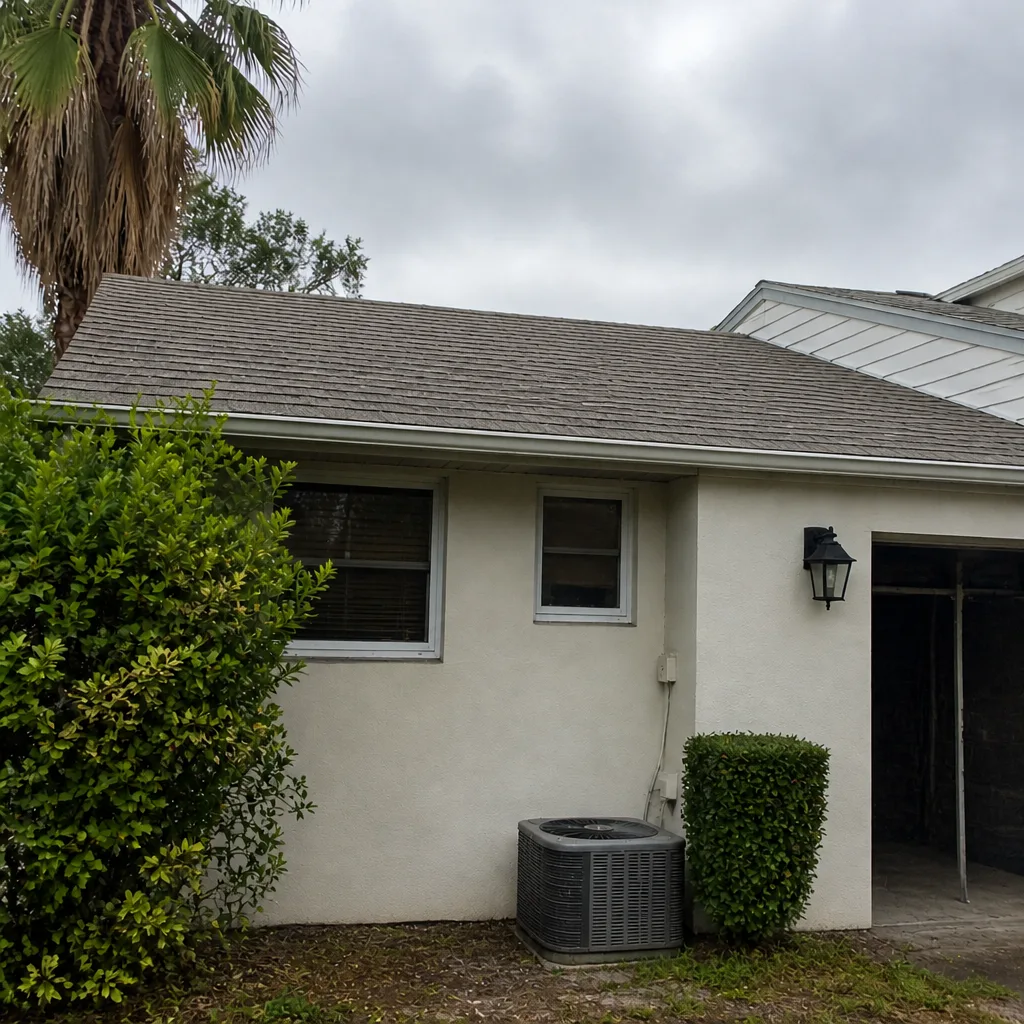 After
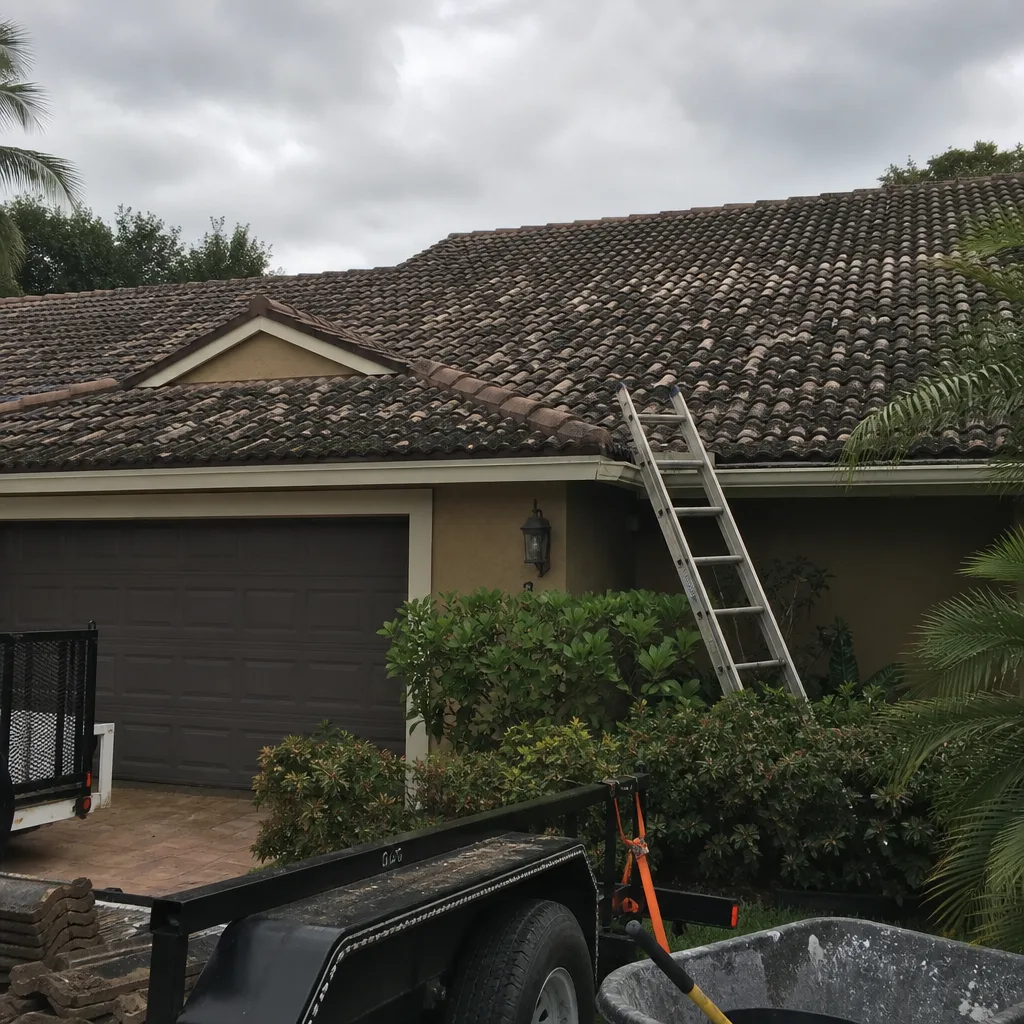 Before
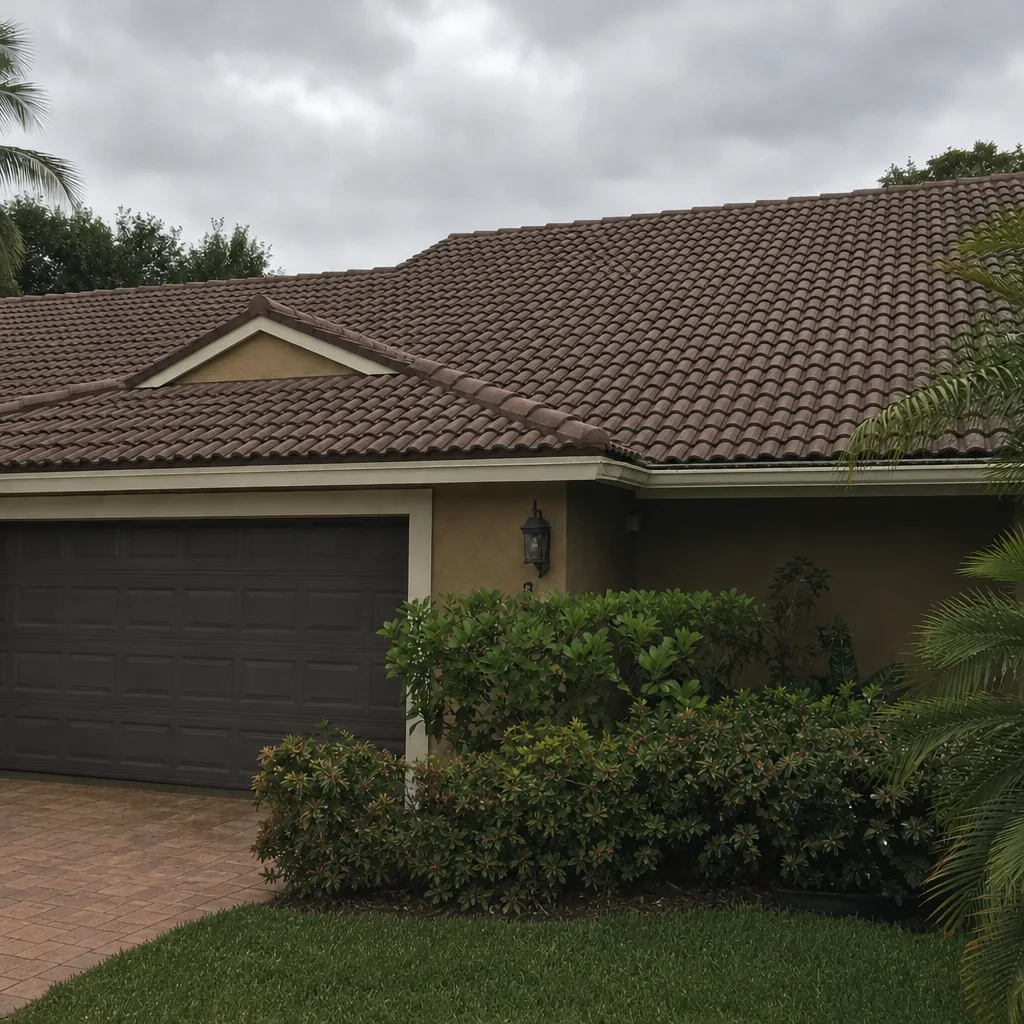 After
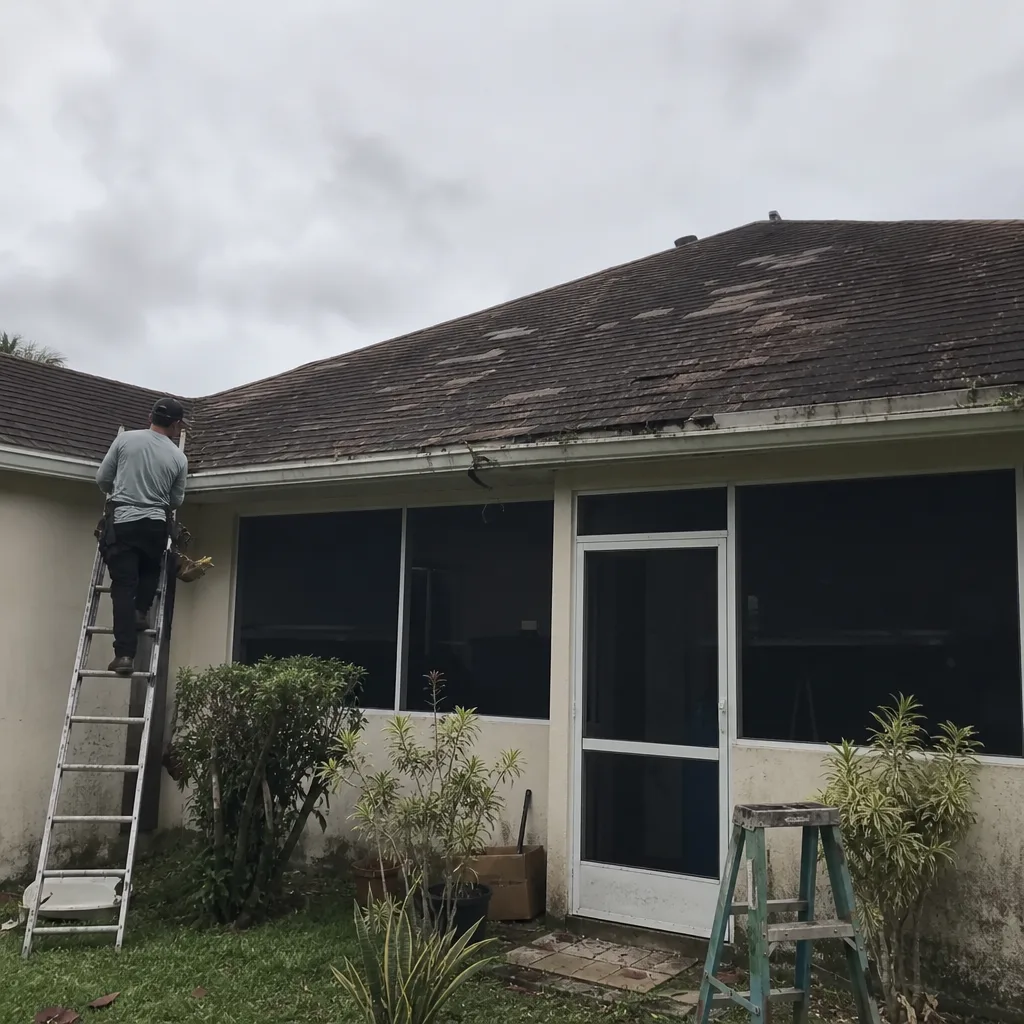 Before
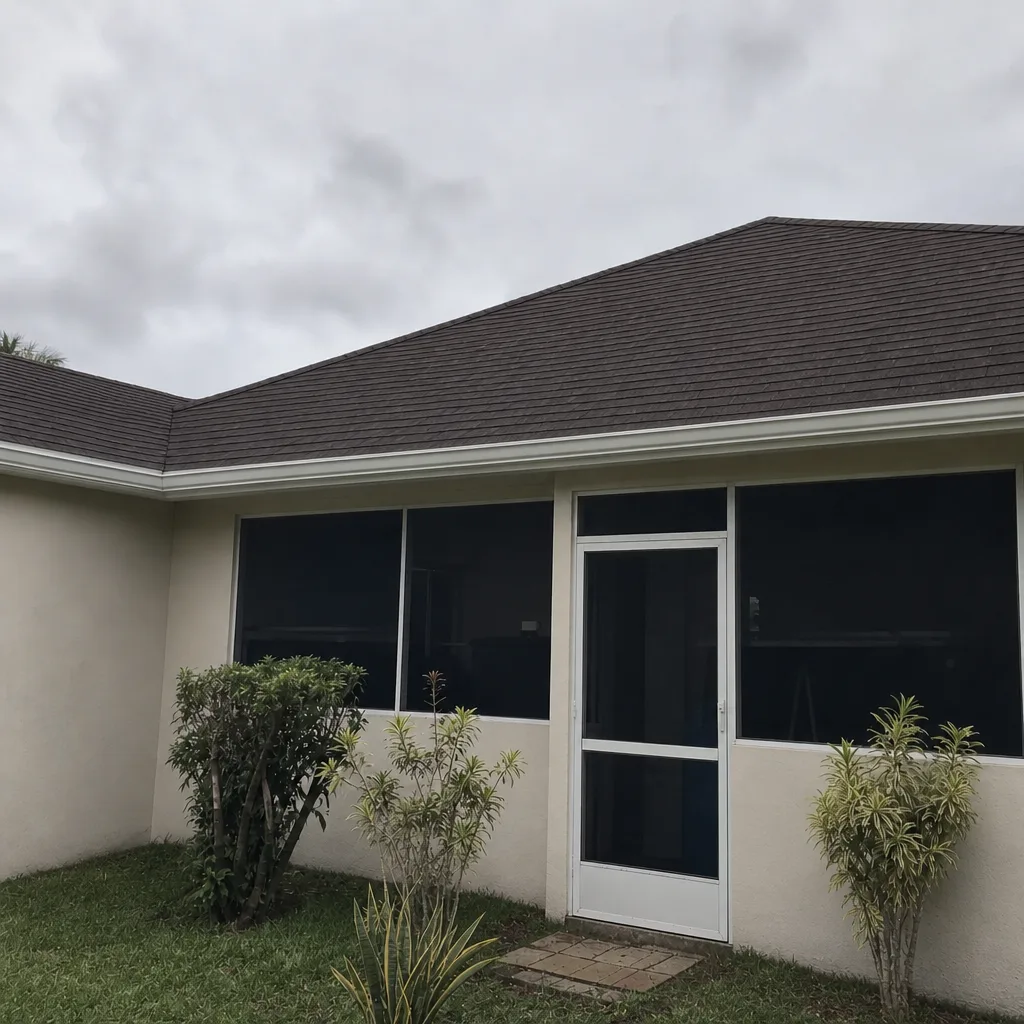 After
When to Call a Professional
Call a professional when you’re seeing two or more warning signs at once – granules at multiple downspouts plus attic humidity above 60%, or lifted shingles plus deck staining. Call when you can see daylight at a flashing seam, when a skylight or chimney has been patched more than once, or when the roof is past the midpoint of its service life and you want a straight answer on repair versus replace. Call before hurricane season starts, not after – a documented baseline lets you spot storm damage against a known condition. Benchmark Roof Repair offers free estimates in Boca Raton. Call (866) 942-9891. We answer 24/7. Fast dispatch from 7am to 7pm, Sunday through Friday.
Frequently Asked Questions
Two signs make a roof problem urgent: water visibly entering the home, or an active leak you can see in the attic. If neither is present, the roof can usually wait for a scheduled inspection. Call (866) 942-9891 to book an estimate. We answer 24/7. Fast dispatch from 7am to 7pm, Sunday through Friday.
Usually not. Most dark streaking is algae feeding on the limestone filler in asphalt shingles, and it’s cosmetic. Growth that’s actually breaking down the shingle has a texture – lichen, moss, or fuzzy fungal patches – and sits in shaded areas that hold moisture. Get a textured growth inspected; treat a smooth streak as a cosmetic issue.
It means the attic isn’t shedding moisture as it should. That can point to inadequate ventilation, an active leak, or both. Get it inspected before the moisture travels to the ceiling – deck staining usually shows up months before drywall does. Call (866) 942-9891 for a free estimate.
Lift with a whole-roof inspection first. If lift is isolated to one slope and the rest of the roof is sound, a targeted repair makes sense. If lift appears on multiple elevations or concentrates at ridges and hips, it usually signals a ventilation problem underneath, and replacing the shingles without fixing the ventilation wastes the repair money.
Once a year is a good baseline in South Florida’s climate, and twice a year if the roof is past the midpoint of its service life or you’re seeing any early warning signs. An annual documented inspection gives you something to compare against and a baseline if a storm passes through.
We work across seven leading manufacturers, including GAF, CertainTeed, Owens Corning, IKO, Atlas, Tamko, and Boral. The breadth matters because each manufacturer has its own installation requirements and its own warranty terms. The recommendation is about fit, not inventory. Call (866) 942-9891 for a free estimate.
The Bottom Line
The warning signs that matter most in Boca Raton are the ones that show up while a repair still makes sense. Granule patterns across multiple downspouts, attic humidity above 60%, deck staining that hasn’t reached the ceiling, lifted shingles that signal ventilation, flashing that’s lost its seal, and textured growth on the shingle surface – these are your 12-to-36-month signals. Learn them, check them twice a year, and get a documented inspection before the decision gets made for you. If you’re seeing any of these on a Boca Raton roof, call (866) 942-9891. We answer 24/7. Fast dispatch from 7am to 7pm, Sunday through Friday. Estimates are free, and we’ll tell you what we find – not what we’d like you to buy.
If you want to put a name to the neighborhoods we work in, our Boca Raton page has that. Seven leading brands, one honest recommendation. From inspection to installation.
Written by the team at Benchmark Roof Repair.